
More... loan
Exciting technical discovery
.. but definitely nerdy lol
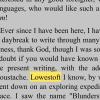
It would be great when providing an online primary source if you could link directly to the relevant phrase/sentence within a long external page. Well it seems you CAN!
Syntax
[URL]#:~:text=[RELEVANT%20PHRASE]
So instead of
https://www.gutenberg.org/files/25852/25852-h/25852-h.htm > then telling people to scroll down 300 paragraphs and you will find relevant section. You can do this…
Lost End Of High Street..
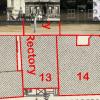
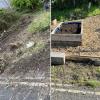
It is hard to make sense of the lost buildings at the top of High Street when all that is left is a long stretch of grass. So we started with an 1893 map that had TWO buildings that are STILL here today Arnold House (4) and The Flint House (now called The Royal Falcon (26)).
1999 Project Saved
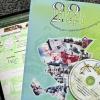
A Millenium Heritage project from 1999 has been restored and saved by LO&N. It can be viewed here and even has its audio files updated to a current (playable) mp3 format as can be seen/heard here

From Counting House to Cosy House!
From 'Counting House' in 1812 to now a welcoming private residence , via a Bank manager taking refuge under his bed covers to avoid wartime bomb damage and a 1960's modern refit, this building has been through more than most!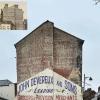
Devereux wall advert restoration
Plans are afoot to try and sensitively recreate this 100 year old wall advert. It will reflect and celebrate the restoration and revitalisation going on currently throughout Lowestoft but particularly on the historic High Street.
The property owner is supportive of the project so work is now underway to raise the £8,000 the project will require.
Any info about 'Football Tea' gratefully received, especially if it's historical evidence.
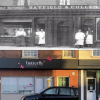
FROM SWAN INN and CROMWELL's HQ
#LowestoftDaysOfChristmas 10th day.. FROM SWAN INN and CROMWELL's HQ to well loved shops in many guises. Nos. 41-42 High Street, as seen today, are replacement buildings for "The Swan" inn, which once occupied the site and served as one of Lowestoft's premier hostelries during the 16th and 17th centuries. It was where Oliver Cromwell stayed overnight on 14 March 1643/44, when he came to Lowestoft (from Cambridge) with a force of cavalry, having heard tell of a shipment of arms either entering or leaving the town (it has never been established which).
Old Lowestoft Scores Trail Walk with live map
Name: Old Lowestoft Scores Trail
Difficulty: Hard - several sets of steep steps. Not suitable for mobility scooters, prams, push chairs
Length: 2.5k (1.6 miles)
Terrain: Steps, pavements, paths, crossing roads
Summary: The walk follows most of the Lowestoft Scores (and passes or crosses them all).The map is interactive. Scroll down for text, photos and video clips.
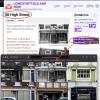
Where Abouts Is...??
A new feature of the website is that from any High Street building page you can see it in the context of where it is in the street, relative to other buildings via a link (RHS or bottom) that takes you to the correct position in our street stroll! e.g. https://lowestoftoldandnow.org/58-high-street#history
It even knows which of the two strolls to show it on, the east side or west side.. clever LOL
best wishes - Joe

Featured in National Magazine
#ourfallenlowestoft FEATURED IN BBC NATIONAL MAGAZINE! Current issue of “Who Do You Think You Are? Special thanks to Lowestoft Town Council and everyone who has generously shared their photos and memories with us.

Talking to the future
As the digital resources we are creating (StreetStroll and OurFallen) have been determined as having important heritage value we have been asked to 'ensure' they will be available for future generations.
If they were physical books, it would be straightforward, we would send copies to local, regional and national libraries and the job would be done! Digital is more of a challenge but we think it is important to address, both for our projects and also for other resources.

National Recognition for Lowestoft
'Lowestoft Our Fallen' will feature in the December issue of the Who Do You Think You Are? magazine, the official companion to the successful BBC TV series.
Innovative features of the Our Fallen project include finding 100 casualties who have never before appeared on any memorial and ability to search by postcode (a feature that is already being used by some schools).
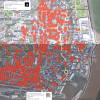
Our Fallen Maps
What do over 2000 casualties look like (large file)? As a spreadsheet, it looks interesting. Plot the home address to a street map, and the impact is sobering in its power.

The software we use could not cope with it on a single map without crashing, so we had to slice it into THREE sections.
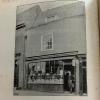
Street Stroll - How?
The Lowestoft Old and Now High Street Stroll
Creating the Stroll is technically quite difficult, and we use several different pieces of software and some specific coding to make it work.
The basic idea is to reproduce a walk along Lowestoft's Historic High Street. Simples, eh.. We wanted to show it as it is, and simultaneously include historical information about the buildings. ( WEST side, EAST side, more )

When the Evidence Disappears
Building an archive not just for today, but for the historian who comes after us
One of the principles behind Our Fallen is simple: if we state something as fact, wherever possible we should also show where that information came from.
A source matters.
If we say that somebody lived at a particular address, served in a particular unit, was injured in an air raid or died in particular circumstances, another researcher should not simply have to take our word for it. They should be able to follow the evidence.
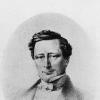
Samuel Morton Peto and the Wider European World (1830-60)
Centuries of Ongoing Change
Denmark Road, Flensburgh Street and Tonning Street: three closely connected roads near the shopping-centre and railway station of the Suffolk coastal town of Lowestoft (the UK’s most easterly community). What possible connection can there be between this trio, the most southerly located of the Scandinavian countries and two towns in the German state of Schleswig-Holstein?

Lowestoft Overseers of the Poor Accounts (1656-1712)
The largest administrative task by far to demand both the attention and the time of the parochial authorities in Lowestoft during the Early Modern period was relief of the poor – a weighty responsibility placed upon English parishes by the formative Poor Law Act of 1601. And the fortunate survival of Overseers of the Poor account books for the period 1656-1712 (Suffolk Archives, Ipswich - 01/13/1/1&2) reveals much about the implementation of this legislation.
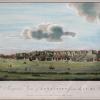
Historical Account of the Denes (14th-18th Century)
The term denes is an earlier version of dunes. It derives from OE dūn, meaning “a hill”, and became applied to coastal sandhills during the late medieval period – being first identified in a printed source dating from the year 1523. In Lowestoft’s case, any undulating effect may never have been very great as a result of tidal action and the effect of the wind, and the progressive development of scrub-growth of one kind and another would have moderated this even further.