
Lothingland-Lowestoft-Great Yarmouth Disputes – Part 2 (1355-1729)
“All Because of the Herring”
The first part of this extended article (Suffolk Review, Spring 2020) dealt primarily with the commercial and civic contention between Great Yarmouth and its nearest neighbours on the Suffolk side of the River Yare: Gorleston and Little Yarmouth. It ended with a brief statement as to how those two communities had become less of a threat to the much larger town by about the middle of the 14th century (due, in part, to their proximity enabling Great Yarmouth to exert its size and influence on them) and how Lowestoft succeeded them as main rival where both maritime trade and local pride were concerned. Recovery from the social, economic and demographic dislocation caused by the Black Death would have taken decades to become fully established, but the immediate interim may also have provided opportunity for advancement as a gradual, but progressive, state of order developed from the initial period of chaos. A severely weakened Yarmouth wouldn’t perhaps have been in the best condition to take note of a potential rival – also in a fragile state itself, but sufficiently well removed in terms of distance either to escape detection where infringement of legally established trading regulations were concerned or to at least take a chance on seeing what could be done in the matter and hoping to get away with it. Once Yarmouth had attempted to extend its sphere of maritime influence to take in the whole of the local inshore area known as Kirkley Roads (August 1372), there was no doubt as to which community it saw as the main threat to its own regional pre-eminence.
4 October 1355 – order granted to the Yarmouth bailiffs, prohibiting trade in herrings and other goods for sale in the town anywhere other than in the town itself. (CCR, Edward III, 10, 231)
12 October 1355 – order given to the Yarmouth bailiffs that merchants with cargoes not for sale in the town be permitted to trade freely in Kirkley Roads. (CCR, Edward III, 10, 231-2.)
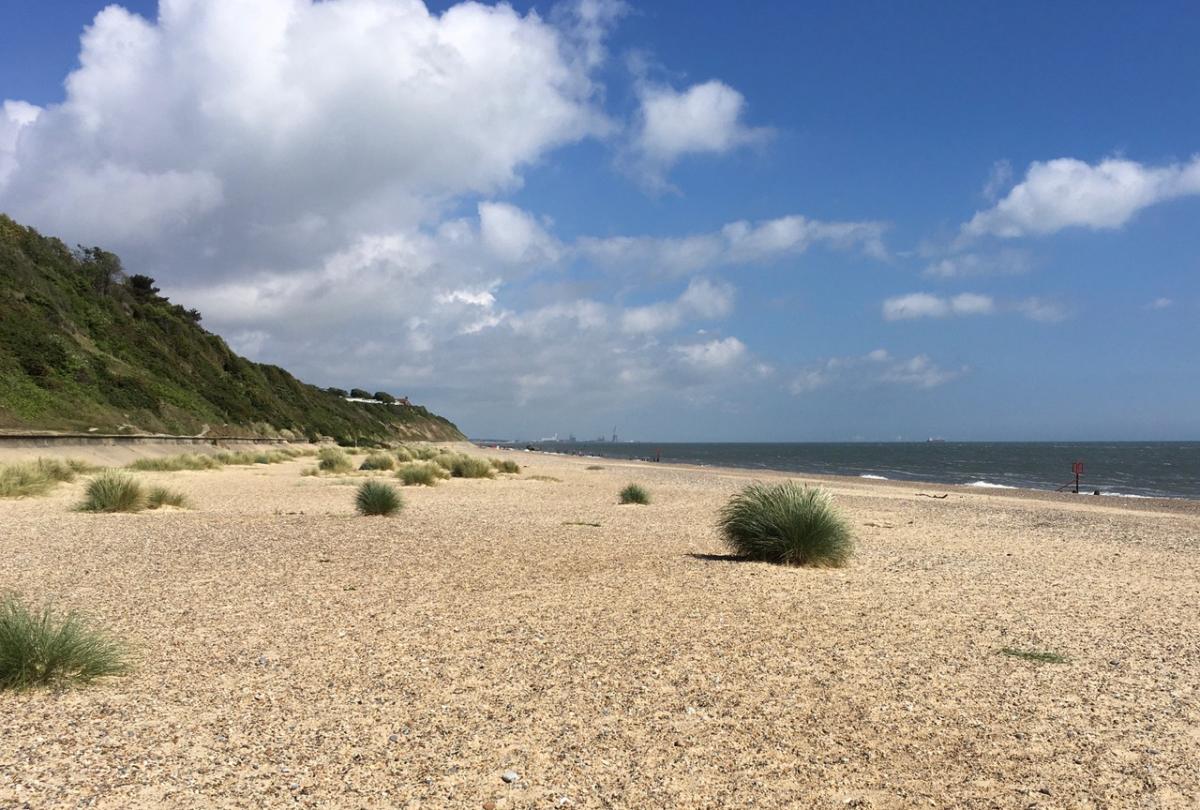
• Kirkley Roads was the generic term used of the anchorage located between the Lowestoft shoreline and the outlying sandbanks (Lowestoft Roads is also encountered, later on). It probably resulted from the fact that, before Lowestoft relocated to its clifftop-site (c. 1300-50), the smaller, adjoining township of Kirkley was the most easterly settlement on that part of the local coast.
17 April - 16 May 1357 – Parliament held at Westminster passed extensive legislation to regulate the herring trade. (PRME, SR I 356)
• The so-called Statute of Herrings gave Yarmouth control of the autumn fishing-season within 7 leucae(leuks/leagues) of its quayside – the leuca’s length was left undefined (perhaps intentionally).
14 November 1357 – commission of oyer and terminer granted to William de Shareshull and William de Catesby to ensure that the Yarmouth herring-trade was conducted fairly and freely, without interference from the hostelers, between the hours of sunrise and sunset, and without any forestalling or regrating taking place. (CPR, Edward III, 10, 654-5)
• Forestalling was the purchase of goods before the official opening-time of a market; regrating was the selling-on, at a profit, of goods purchased. Both practices were forbidden and punishable by fines. • The hostelers would have been Yarmouth merchants acting as hosts and sponsors (at a price) of visiting fishermen from the near-continent (mainly the Netherlands) and other parts of England.
20 August 1360 – regulations for Yarmouth Herring Fair re-stated: fish not bound for sale in the town could be traded at sea, as could small catches of 1½ lasts or less [12,000 fish to the last]. (CCR, Edward III, 11, 129)
28 February 1361 – order made to the Sheriff of Norfolk that ships from Little Yarmouth and Gorleston were to pay any customs due to the Crown in Great Yarmouth, but be allowed to load and unload cargoes at their own quays – public proclamation of these ordinances to be made in Yarmouth, Little Yarmouth and Gorleston. (CCR, Edward III, 11, 246-7)
22 August 1372 – re-grant of the Yarmouth charter confirmed the 7-leuk extent of privilege, with the town’s citizens claiming that it was to be measured from the Haven’s mouth, not from the Town Quay – also, Kirkley Roads were annexed to the port and made part of it, “for the aid and relief of the said town” and for the sum of 100s. added to the annual farm [£55]. (CoCR, 5, 224-5 & Gillingwater, 121-5)
28 April 1376 – Yarmouth’s privileges rescinded (see immediately below). (Gillingwater, 127-8)
28 April - 10 July 1376 (the “Good Parliament”) – as a result of complaints received from the commons of England, and in response to a petition from Lowestoft, the Yarmouth charter of 22 August 1372 annexing Kirkley Roads was repealed and revoked, the town’s other privileges being retained. (PRME, C65/30, 49 & App. 3, & Gillingwater, 127-8)
• The “Good Parliament” was so called because it saw the Commons’ first use of impeachment as a means of removing corrupt members of the Royal Council and the introduction of the office of Speaker to represent its views in the national assembly.
23 June 1376 & 7 July 1376 – Yarmouth charter of 22 August 1372, ordering that no herrings or other merchandise were to be loaded or unloaded within 7 leagues of the town, except at the town itself or in Kirkley Roads, was revoked as being injurious both to King and people. (CCR, Edward III, 14, 432 & 434)
• These two pronouncements are confirmations of the Parliamentary decision immediately above. The league (or leuca) was a flexible unit of distance-measurement, which could be one, two or three miles, depending on local conditions and context.
18 August 1377 – commission of oyer and terminer granted to Robert Daston, Roger Beauchamp, William de Skypwyth, Robert Crull and John Holt re Yarmouth complaint that, in last parliament of Edward III’s reign [28 April - 10 July1376], herring trade restrictions had been relaxed, thereby causing hardship to the town and making it unable to pay its farm and other taxes and to support the Navy with a supply of ships – former liberties needed to be restored. (CPR, Richard II, 1, 50 & Gillingwater, 128)
12 April 1378 – re-statement of Yarmouth herring rights: to remain in force until next parliament. (CPR, Richard II, 1, 188)
1 May 1378 – riot in Lowestoft at a public statement there of aforesaid Yarmouth privileges, given by the Under-sheriff of Norfolk. (Swinden, 623-4 & Gillingwater, 129)
13 September 1378 – enquiry into the disorder authorised and carried out at Little Yarmouth – result not known. (Swinden, 626-7 & Gillingwater, 129)
• No reference to either of these events is to be found in CCR, CPR or PRME.
8 October 1378 – inquisition held in Yarmouth, following petition from its burgesses re the poor state of the local economy and harbour works – decline had set in, following revocation of its privileges – these needed to be restored and Kirkley Roads kept under its control. (CIM, 4, 54-5 & Gillingwater, 128-9)
9 October 1378 – inquisition continued the following day in Lowestoft – Yarmouth burgesses again pleaded their case for controlling Kirkley Roads, stating that their town had been “much more heavily burdened” than Lowestoft – on the other hand, Lowestoft was not enclosed [i.e. walled] and was therefore unable to resist enemies, and it had been damaged by the annexation of Kirkley Roads. (CIM, 4, 55 & Gillingwater, 128-9)
20 October - 16 November 1378 – reference to complaints re the high price of herrings at Yarmouth, previously made, and to inquiry into the matter agreed at the previous parliament – decision made to confirm the town’s ancient privileges, so that everyone might trade freely in herrings during the period of the autumn Fair. (PRME, C65/33, 80)
25 November 1378 – Yarmouth privileges re-granted (see 12 April above). (CoCR, 5, 254-6 & Gillingwater, 129)
5 November - 6 December 1380 – reference made in Parliament to re-granting of Yarmouth privileges [especially the matter of Kirkley Roads] and to its detrimental effect on other parties – request made that the Yarmouth charter be rescinded – decision taken that the said privileges be scrutinised and, if found wanting, to have a new commission of enquiry set up – this to report back to the Council, which would then decide on the best course of action – Yarmouth bailiffs and people to be ordered to act in such a way as to give no cause for complaint. (PRME C65/36, 39 & Gillingwater, 129-30)
28 April 1381 – commission of oyer and terminer granted to William de Ufford (Earl of Suffolk), Hugh de Segrave (Steward of the Household), Michael de la Pole, John de Cavendish, Robert de Tresilian, Roger de Fulthorp, Robert de Swylyngton, John Argentem, William de Wyngefeld and John de Holkham to investigate complaints made by the commons of Norfolk and Suffolk that Yarmouth bailiffs would not allow them, at any time of year, to buy or sell victuals and merchandise in Kirkley Roads. (CPR, Richard II, 1, 633)
28 April 1381 – Sheriffs of Norfolk and Suffolk charged with summoning a jury for an enquiry to be held into certain matters concerning Yarmouth and Lowestoft and as to the former’s privilege. (CIM, 4, 92)
• Some very high-profile men named in the first of these two notes. Robert Tresilian became Lord Chief Justice after the Peasants’ Revolt and was given the task of punishing ringleaders.
6 June 1381 – manor of Lowestoft [Lothingland not mentioned] granted to Thomas de Holand, the King’s brother [Earl of Kent]. ( CPR, Richard II, 2, 14)
• June 1381 – severe disruption and upheaval in the South-east and East Anglia caused by the Peasants’ Revolt.
23 & 26 September 1381 – inquisitions held at Lowestoft and Norwich re Yarmouth privileges being “prejudicial and hurtful” to the commonalty of the counties of Norfolk and Suffolk, and all other counties – findings to be presented to Parliament in November. (Gillingwater, 130-2)
3 November - 13 December 1381 & 24 January - 25 February 1382 – the Commons requested, and the King agreed, that the 1372 Yarmouth charter be rescinded, including the 100s. increment added to the town’s annual farm – earlier, pre-1372 privileges to remain in operation. (PRME, C65/37, XVII 89 & Gillingwater, 131-2)
3 February 1382 – Yarmouth bailiffs ordered to appear (on pain of £1,000 fine) at Westminster on 10 February 1382 to show why the town’s charter should not be rescinded. (CCR, Richard II, 2, 38)
25 February 1382 – Yarmouth’s 7-league trading privileges revoked, at request of Parliament [ref. previous two entries to this one and its predecessor]. (CPR, Richard II, 2, 105)
28 February 1382 – inquisition held at Lowestoft re Yarmouth’s privileges in Kirkley Roads – first granted by Edward III [1372], then revoked [1376], and since confirmed by present king [1378] – said privileges stated to be prejudicial to the commonalty of Norfolk and Suffolk, and to all other counties, in the matter of free trading – and confirmation of them was therefore now to be made null and void. (CIM, 4, 105)
22 June 1382 - 21 June 1383 – during the sixth year of his reign, Richard II visited Yarmouth in order to see things at first hand and form an opinion of the town’s case. (Gillingwater, 132)
15 September 1384 – enquiry ordered into a Lowestoft riot re the public announcement within the town of Yarmouth’s privileges. (CPR, Richard II, 2, 503)
20 February 1385 – Yarmouth’s privileges re-granted because withdrawal of the same had caused the town to “become desolate and insufficient to defend itself against the king’s enemies”. (CPR, Richard II, 2, 540-1 & Gillingwater, 132-3)
8 December 1385 – Yarmouth’s charter rescinded and the 1381 decision [1382?] confirmed. (CPR, Richard II, 3, 73 & Gillingwater, 133)
1 October - 28 November 1386 – Yarmouth’s privileges upheld, in Parliament held at Westminster, providing that all people (including aliens) could trade freely in herrings in town and port, and convey the fish at will during the period of the autumn Fair without hindrance or disturbance. (PRME, 65/45, 23 & Gillingwater, 133)
• Aliens was the term used of visitors from the European mainland (especially Holland and Zeeland).
28 November 1386 – Yarmouth’s charter re-granted [remaining technically in force until 1597]. (CoCR, 5, 305-6 & NRO, Y/C2/4)
24 November 1399 – confirmation of Yarmouth’s charter reinstatement, immediately above. (CoCR, 5, 386, & BL, MS Charters, Norf. a.5, no. 596-7)
8 February 1401 – agreement between Yarmouth bailiffs and men of Lowestoft that the latter could freely buy and sell herrings and other victuals (except Irish goods) from, and to, any merchants except those “fishers of Holland and Zeeland” hosted in Yarmouth – this, relating to traffic in Kirkley Roads, with 6s. 8d. payable on every last of fresh herrings sold – such sales to be carried out during daylight hours, not at night. (CPR, Henry IV, I, 428)
• The hours of darkness could, of course, have concealed all kinds of illegal activity.
29 September 1401 – Yarmouth’s bailiffs granted the right, by letters patent, to publicly proclaim the town’s privileges in Kirkley Roads at Lowestoft – ensuing riot there – Council order made for parties involved to appear at Westminster. (CSL, Henry IV & Henry V, 31)
20 May 1414 – confirmation of Yarmouth’s privileges – letters patent of Henry IV. (NRO, Y/C2/5)
15 July 1417 – royal grant to Yarmouth to build a bridge across the River Yare, at the point where the ferry-crossing was in operation. (CPR, Henry V, 2, 117-18 & Manship, 51)
• This grant was to “the bailiffs and commonalty of the town”, but with an ironic sting in the tail – some ten years before, the bailiffs (for their personal profit) had decreed that foot passage using the ferry would continue to be free, but that conveyance of goods across the river would carry a charge – presumably, complaints from traders on the Suffolk side of the Yare (and perhaps from within the town itself) resulted in Crown authorisation for a bridge of stone or wood to be constructed, sufficiently wide for the passage of horsemen and pedestrians and without pontage [a bridge-toll] being levied.
• Manship further advises that the first bridge was made of timber, with eight supporting arches.
• Swinden, 930, records the year of construction as 1427.
0.0.1426 – reduction, from four to two, in the number of bailiffs elected annually. (Swinden, 929-30)
• Little or nothing in the way of further dispute between Yarmouth and Lowestoft is to be found recorded, in the surviving documentation used, until the second half of the 16th century.
• July 1549, Kett’s Rebellion – Yarmouth’s Sixth Haven works destroyed by insurgents.
14 February 1554 – confirmation of Yarmouth privileges, by letters patent, of Mary Tudor. (NRO, Y/C2/8)
24 February 1579 – reference made to the Yarmouth case v. Gorleston and “other towns” in Lothingland, as to the legal requirement to unload ships in its harbour being the exclusive right of Yarmouth itself. ( CSPD, Edward VI, Mary & Elizabeth, 1, 619)
• Probably the case noted in Ecclestone, 98-9, where Gorleston, Gunton and Lowestoft (and Aldeburgh, too) petitioned the Council that fishermen be allowed to land catches at Gorleston and Lowestoft.
7 August 1595 – complaint against Yarmouth to Privy Council, from ketch-men of Colchester, Manningtree, Ipswich, Orford, Aldeburgh, Dunwich and Southwold, that no autumn trading in herrings was allowed within 7 miles of that town, to their disadvantage and ruin. (Gillingwater, 136-7)
? August 1595 – complaint made by Lowestoft’s citizens, at about the same time, that the Yarmouth bailiffs argued that the 7 leuks/miles was to be measured from the harbour-mouth, not the Town Quay – Privy Council ordered that three judges (Sir John Fortescue, Mr. Justice Clench and Mr. Justice Gawdy) should adjudicate in the matter – said judges ruled that the distance be measured from the quay, not the harbour-mouth – decision immediately contested by Yarmouth. (Gillingwater, 137-41)
• Harbour-mouth measurement would have placed Lowestoft just within Yarmouth’s area of control.
28 November 1595 & 30 April 1596 – certificates issued by the three adjudicators recommending a) that measurement of the 7 miles from a point in Yarmouth should be determined by the Lords of the Privy Council and b) stating that there was no need (in spite of Yarmouth’s dissatisfaction) to alter the first document. (APC, 25, 402-4)
16 May 1596 – Privy Council ordered measurement of the 7 miles from Yarmouth Quay and for its termination to be marked on the shoreline – Sir Arthur Heveningham, Sir Henry Woodhouse and Henry Gawdy Esq. to represent Yarmouth – Sir Robert Jermyn, Sir John Higham and Anthony Wingfield Esq. to act for Lowestoft – a majority opinion of four adjudicators as to location of the limit was to be sufficient – Yarmouth protest followed immediately and a second commission was ordered. (Gillingwater, 142-5)
16 May 1596 – John Felton and Thomas Damett of Yarmouth, and William Wilde and Thomas Ward of Lowestoft, appeared before the Privy Council at Greenwich re the measurement of the 7 miles – the starting-point to be “Yarmouth key” [sic], not the Haven mouth – the six men named in the previous note again referred to as adjudicators – exact location and extent of Kirkley Roads was to be defined. (APC, 25, 400-2)
28 July1596 – letter sent to the six commissioners (see previous entry but one), requiring the 7 miles to be measured from both Yarmouth quay and haven mouth and that each extent be recorded – no marks to be set up until the Privy Council had reached a decision. (APC, 26, 66-7)
4 August 1596 – all six commissioners, together with the Yarmouth bailiffs and principal citizens, assembled at Lowestoft to open an enquiry into the process of measuring the 7 miles – commission dissolved because of Yarmouth’s objections – Lowestoft’s three commissioners contacted the three supervising judges to argue the town’s case and received a favourable response from the Privy Council. (Gillingwater, 147-9)
9 August 1596 – letter sent to the commissioners, replying to their letter re the difficulties of getting an agreement between Yarmouth and Lowestoft – matter to be suspended until after 1596 herring season. (APC, 26, 98-9)
15 August 1596 – decision made that both Yarmouth and Lowestoft were able to defer their case until mid-November, so as to appear before the Privy Council “without hinderance to their fishing”. [The local herring season, or Free Fair, lasted from 29 September to 11 November.] (APC, 26, 115)
10 November 1596 – Yarmouth bailiffs claimed that, in August 1595, the Royal Council had confirmed its trading privileges of 200-year duration against Lowestoft’s opposition – request made that Sir Robert Cecil [Secretary of State] confirm these same privileges and prevent Yarmouth from being “drawn into further expenses and trouble…upon such frivolous questions as they of Lowestoft now devise”. Plea signed by John Coldam and Henry Ebbottes. (CCPHH, 1596, 6, ref. 46.44)
0.0.1597 (post-29 April) – act of Parliament passed, ordering that the 7-mile distance (at eight furlongs to the mile) be measured from Yarmouth’s Crane Key [sic] and a marker-post put in place on the shoreline – this, to be carried out before 24 August (feast of St. Bartholomew). (Gillingwater, 149-51)
• Act cited in full, without dating, but has not been found in the sources used for this study.
0.0.1597 – “Humble suit” of Yarmouth town presented for “the continuance of our ancient liberties against the molestation of Lowestoft”. (CCPHH, 1597, 7, ref. 141.182)
11 January – 9 February 1598 – continuance of the 1597 Parliament, following Christmas adjournment – failed Lowestoft attempt to contest Yarmouth herring-fishing rights – Yarmouth case put by [Sir] Henry Hubbert [Hobart] and John Felton. (HPO, 1597 & NRO Y/C36/7/5)
• Hobart and Felton were the borough’s MPs.
22 July 1608 – new Yarmouth charter of incorporation granted, by letters patent of James I, modifying its form of civic government, giving it Admiralty jurisdiction between Winterton [Norfolk] and Easton Ness [Suffolk], and confirming other privileges. (NRO, Y/C2/12)
26 February1610 – Lowestoft bill, contesting this, read in House of Commons. (HPO, 1604-1629)
26 February1610 – Fourteen days given for Yarmouth charters to be submitted to House of Commons. (JHC, 1, 400)
13 March 1610 – re the matter of free trading in herrings, Mr. Dammett [Thomas Damet, YH bailiff and M.P.] opposed the Lowestoft bill and Mr. Alford [Edward Alford, Colchester junior burgess and M.P.] supported it. (JHC, 1, 410)
13 ? March 1610 – second reading of said bill failed, after opposition from Yarmouth. Thomas Damet described Lowestoft as “a town of small importance”, whose people were poor “by their idleness”. HPO, 1604-1629)
16 March 1610 – counsel for both sides referred to. (JHC, 1, 412)
26 March 1610 – matter of the herring dispute to be “sit upon” on Friday [30th]. (JHC, 1, 414-5)
22 June 1610 – Lowestoft herring matter scheduled for Monday [25th]. (JHC, 1, 442-3)
• No further information has been found regarding either of these given days.
0.0.1621 – further, possible (unsuccessful) LT bill referred to. (HPO, 1604-1629 & NRO, Y/C20/1)
• In 1659, with Lowestoft weakened by economic troubles, the destructive effect of the serious 1645 Fire and the loss of leading mariners to Naval service, a plea was made by its townsmen regarding a further revival of the old disputes – Yarmouth claiming once again that Kirkley Roads were not adjacent to its harbour-mouth, but opposite Kirkley township itself, which therefore gave it control of the herring-trade up to that point. (Gillingwater, 151-2.)
• This was during last year of the Interregnum, Charles II landing at Dover on 25 May 1660. Was Yarmouth (given its anti-Royalist political leanings) perhaps having a “last fling” under Parliamentary rule, before the Monarchy was restored?
• A further factor in Lowestoft’s fragile condition was the demographic decline caused by the cumulative effect of plague outbreaks in 1585, 1588, 1603 and 1635 (the third of these being the most serious, by far), which probably reduced the town’s population from c. 1500 towards the end of the sixteenth century to around 1100-1200, or so, by the middle of the seventeenth.
1659-63 – protracted resurrection of the Lowestoft-Yarmouth dispute(s). (Gillingwater, 151-244)
Autumn 1660 – Yarmouth had disrupted Lowestoft’s local herring season and sent a vessel, with twenty-five armed men on board (swords, half-pikes, muskets and a “great store of stones”), to ride at anchor offshore and disrupt the local, legitimate herring-trade. (.Gillingwater, 153-5)
14 January 1661 – back-up petitioning on Lowestoft’s behalf from Pakefield and Kirkley, and from Brighton, Rye, Hastings, Dover and Ramsgate, as well as “the rest of the Western Fishery”. (Gillingwater, 157-8)
• Vessels from the coast of Kent and Sussex were always, traditionally, referred to as being from the “Western Fishery”.
25 January 1661 – Lowestoft petition to Privy Council, arguing its case. (Gillingwater, 157-61)
24 May 1661 – petition of Lowestoft citizens presented to House of Lords, claiming molestation of its fishing-trade by the people of Yarmouth – order given that the case of both sides be heard on 7 June. (JHL, 11, 265)
20 June 1661 – case between the two towns heard, at the bar of the House of Lords – order given that both sides’ witnesses be sworn and examined on 27 June. (JHL, 11, 286)
27 June 1661 – evidence heard from the witnesses of both towns – House of Lords members to hear judges’ opinions before any decision was made – the latter requested to be expeditious in the matter. (JHL, 11, 290)
22 July 1661 – order given that vessels from the Northern and Western fisheries be allowed to catch herrings, off Yarmouth, under the same conditions as they had for the previous three years – Lowestoft and Yarmouth also to carry on fishing, without any violations of the law, their respective cases being under consideration by Their Lordships. (JHL, 11, 317)
22 February 1662 – draft report of the Lord Chief Justice of the Court of Common Pleas re the Yarmouth and Lowestoft fisheries placed before the House of Lords – he and the other judges found that the measurement of the 7 miles was still not finally resolved, even after all the previous rulings – matter ordered to be decided on 26 February. (JHL, 11, 391-2)
26 February 1662 – House of Lords order given for a new 7-mile measurement to be carried out, before 24 June, from Yarmouth’s Crane Key [sic] and a new post set up on the shoreline. (JHL, 11, 394 & Gillingwater, 193-4)
27 May 1662 [Sunday] – this date arranged for the said measurement to be carried out – Under-sheriff of Norfolk, Roger North, questioned House of Lords authority in the matter and refused to co-operate with his Suffolk counterpart – dined at midday with the Yarmouth bailiffs! – Under-sheriff of Suffolk engaged two honest and reliable surveyors and began the exercise at 4 p.m., starting at the base of the crane on Crane Quay – finished half an hour before sunset [c. 8 p.m.], at eighteen poles [ninety-nine yards] short of the earlier measurement [1597?] – width of the Yarmouth harbour-mouth not included in the calculations – surveyor’s chain measured, after use, at exactly twenty-two yards length – distance approved by Roger Williams, Sheriff of Suffolk (visiting Yarmouth, that evening), and confirmed in a letter to London the following day. (JHL, 11, 511 & Gillingwater, 196-201).
20 June 1662 – a new oak post (fashioned out of a tree, brought from Sotterley Hall estate) put in place on the shoreline, to mark Yarmouth’s limit of authority. (Gillingwater, 236)
• Details recorded in accounts kept by James Wilde of expenses incurred by Lowestoft in the suit against Yarmouth – said accounts occupying Gillingwater, 221-39. • Location: to the north of Tramp’s Alley (formerly Lopham Score or Locum Hole, at Gunton-Corton) – a much later marker, made of pitch-pine and placed further to the south (in line with the score itself) was still in place during the later years of the 19th century and known as “Corton Pole” – used by the local rocket-line crew to test its breeches-buoy marine rescue equipment – an OS map of 1906 shows a “Rocket Staff” on the top of the low-profile cliff itself (probably placed there to give greater height for the gear to work more effectively).
13 April 1663 – Lowestoft petition presented once again, plus an attached narrative of proceedings between it and the citizens of Yarmouth. (JHL, 11, 511)
13 April 1663 – Roger North to be summoned before House of Lords as “a delinquent”. (JHL, 11, 512 & Gillingwater, 203)
15 April 1663 – further measurement of the 7 miles ordered by House of Lords. (Gillingwater, 203-4)
• Nothing found recorded in JHL, 11, for 15 April.
30 April 1663 – Roger North appeared before the House of Lords and, “upon his Knees”, made an unreserved apology for his behaviour. (JHL, 11, 515 & Gillingwater, 206-7)
10 June 1663 – final, formal measurement of the 7-miles limit of YH jurisdiction carried out and the resulting certification presented to the House of Lords, 19 June 1663. (Gillingwater, 208)
• Nothing found recorded in JHL, vol. 11, for 10 June.
c. 29 September 1663 – Yarmouth vessels entered Lowestoft South Roads and seized a Dutch yagger (loaded with red herrings) and a French fishing-boat – took a barrel of fish from the former, worth 14s (as the duty due to Yarmouth), and fish-kettles from the latter worth 13s 4d – Admiralty Court convened at Lowestoft during 1664 and Yarmouth found to be at fault – the town warned as to its future conduct. (Gillingwater, 211-16)
• Yag(g)er, or ventjagers, were small, fast-sailing Dutch vessels which conveyed herrings, caught by that country’s bussesand processed on board, from the North Sea fishing-grounds to the home-ports.
24 April 1665 – letter from James Wilde to Samuel Pepys [clerk/secretary to the Navy Board], informing him that Capt. William Hill of the Coventry had arrived off Lowestoft with a convoy of thirty small vessels from Lynn, wanting a supply of wood and candles – had sent to shore for them, but would not allow his men to go near anyone – had had the goods left on the seashore and then sent to fetch them – had been ordered to act like this, though his men were in good health – currently lying wind-bound, but would sail for a lee road when he was able – requested that his ship to be victualled. (Admiralty Paper, CSPD, Charles II, 4, 326)
28 April 1665 – Capt. William Hill, to Samuel Pepys – went ashore at Lowestoft to buy wood and candles – ascribed the strange report of plague amongst his crew to Sir Thomas Meadowes of Yarmouth, who “may be an honest man to the King, but no wise man in his actions” – ship’s company were, and have been all voyage, very well – the ship was very foul, being four months off the ground, and all provisions expended – desired to bring up a small prize captured, supposed to be Dutch – to be submitted to the Admiralty Court. (Admiralty Paper, CSPD, Charles II, 4, 335)
• Plague had broken out in London during the Spring. Was Meadows spreading a false rumour in order to inconvenience both the visiting convoy and the town of Lowestoft? Or was he trying to prevent the spread of disease during Yarmouth’s own 1664-5 epidemic? JPs sealed off the town, in May; C.J Palmer’s voluminous notes in Manship cite 2,500 deaths (224).
• Meadows was Yarmouth bailiff in 1662, 1671 and 1682, and mayor in 1684.
• The Coventry was a 28-gun ship, captured from Spain in 1658 as the San Miguel – later taken by the French, in 1666 – first Royal Navy ship to be named Coventry.
14 January 1676 – letter signed by James Wilde, Samuel Pacey and Thomas Mighells, approving the accounts kept by Wilde for monies spent in opposing Great Yarmouth, 1660-3, and thanking all those people who had supported the town in its struggle. (Gillingwater, 244)
31 January 1679 – Lowestoft granted formal port status [as member to Yarmouth, the head-port], with right of importation of gruff goods [coarse merchandise] and exportation of butter, cheese and fish. (CTB, 5, ii,1218)
13 May 1679 – Lowestoft requested the right to export and import coal and grain, in addition to those privileges already granted. Decision of 24.5.1679 sanctioned exportation only of grain and importation only of coal. Entry of all merchandise to be made at Yarmouth and Lowestoft was to pay the daily allowance of any customs officer sent over from the head-port. (CTB, 5, ii, 1266 & 6, 65)
• Before many years had run their course, Lowestoft had its own resident customs officers and Trinity House pilots were an established presence also.
12 May 1684 – Lowestoft inhabitants requested the Attorney General that the term 7 leagues, in the new Yarmouth charter, be changed to 7 miles. (CSPD, Charles II, 27, 13-14)
25 May 1684 – approval given by Charles II that leucas be replaced by milliaria [miles]. (CSPD, Charles II, 27, 32)
22 July 1684 – new Yarmouth charter granted by Charles II and annulled 0.0.1688 by James II. (NRO, Y/C2/14 & Swinden, 767)
0.0.1729 – last attempt by Yarmouth to assert its ancient privileges over Lowestoft by planning to arrest vessels from the Suffolk town involved in buying herrings from “northern and west-country fishers” – fighting-fund organised by Lowestoft and retaliatory legal action threatened – Yarmouth backed off. (Gillingwater, 216-20)
• While these long-running disputes with its neighbours were perhaps the most troublesome of Great Yarmouth’s commercial difficulties, it should not be forgotten that the town had other problems to face during the late medieval period particularly. First, there was the matter of the silting-up of its haven-mouth, with a number of attempts made to engineer new entrances (seven, in all). Next, came conflict with the Cinque Port Bailiffs concerning their right of jurisdiction in the conduct of the annual Free Fair in Herring (29 September to 11 November). And, finally, there was the aggravation caused by the London Fishmongers Company, whose members constantly sought to bypass Yarmouth’s approved regulations concerning the purchase of herrings during the period of the autumn season – this, in order to acquire supplies of fish directly, at sea, from the men who caught them, thereby saving both time and money in the process.
• Given the fact that Great Yarmouth’s overall conflict with its neighbours stretched out to something between four and five hundred years’ duration, it must surely be one of the longest and best-documented examples of local civic and commercial rivalry, during the Late Medieval and Early Modern periods, to be found in the whole of England.
Reference key: APC – Acts of the Privy Council.
BL – Bodleian Library.
CIM – Calendar of Inquisitions Miscellaneous.
CCPHH – Calendar of Cecil Papers in Hatfield House.
CCR – Calendar of Close Rolls.
CoCR – Calendar of Charter Rolls.
CPR – Calendar of Patent Rolls.
CSL – Calendar of Signet Letters.
CSPD – Calendar of State Papers Domestic.
CTB – Calendar of Treasury Books.
Ecclestone [A.W., ed.] – Henry Manship’s Great Yarmouth (1971).
Gillingwater [E.] – A History of the Ancient Town of Lowestoft (1790).
HPO – History of Parliament Online.
JHC – Journal of the House of Commons.
JHL – Journals of the House of Lords.
Manship [H.] – The History of Great Yarmouth (1619) – ed. C.J. Palmer, 1854.
NRO – Norfolk Record Office.
PRME – The Parliamentary Rolls of Medieval England.
Swinden [H.], The History and Antiquities of the Ancient Burgh of Great Yarmouth in the County of Norfolk (1772).
- All documentation referred to in the key (except for Bodleian Library, Ecclestone, Gillingwater and Norfolk Record Office) is available on the Internet from various digitised volumes of published Printed Primary Sources and the PRMEspecialist-site. Both Great Yarmouth histories (those of Manship and Swinden) are also able to be accessed online.
- Numbers following many of the different works cited refer to volumes and pages in those particular books. CCPHH and PRME have reference numbers only, while HPO is a composite of dedicated articles and data on various aspects of Parliamentary activity from the late fourteenth century up to the 1832 Reform Bill.
Article first published in Yarmouth Archaeology & Local History 2019 (with its second part) as one continuous piece. Published in two parts in Suffolk Review, New Series 74 & 75 (Spring and Autumn, 2020), and in the Lowestoft Archaeological & Local History Society Annual Report, January 2022 & 2023).
United Kingdom
Add new comment