
More... history
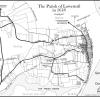
Former Names for Lowestoft Streets, Roads and Scores
Former Names for Lowestoft Streets, Roads and Scores
All of the older names listed below in italic font derive from documentation of one kind or another relating to the town – particularly those manorial records recording the transfer of property 1582-5 & 1616-1756, to the Revd. John Tanner’s transcriptions of these done up until 1720-25, and to the Manor Roll of 1618. All found as Suffolk Archives (Ipswich), 194/A10/4, 194/A10/ 5-19, 454/2 and 194/A10/73.
The Lowestoft Scores Trail
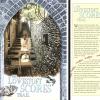
Welcome to the Scores Trail. This booklet has been designed to help you understand a little more of Lowestoft history and of the significance of these ancient pathways leading down to the sea. You can find your way around the trial by reading the map in the attached Ledford leaflet or by following the red herring way markers. Lowestoft was originally built on top of the cliffs overlooking the North Sea. The schools that run down these clips were ways to access from the high ground to the beach area.

Lowestoft’s Famous Five (Naval Heroes – 17th-18th Century)
17th & 18th Century Naval Commanders
It is a claim – not made lightly by this writer – that no town of its size, in the whole of England, produced as many eminent top-rank Naval commanders as Lowestoft did between 1660 and c. 1720. During that time, no less than four admirals and five captains came from five local families mainly involved in fishing and maritime trade: the Allins, the Arnolds, the Ashbys, the Leakes and the Mighells.

A Lowestoft Deer Park (1377)
Recorded on Suffolk Heritage Explorer (Internet) as Monument record LWT 368.
Centring on OS 1:25000 Series Map reference TM59 539939.
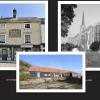
Three Key Buildings: Domestic, Religious & Industrial (14th-19th Century)
In some ways, buildings are every bit as much historical documents as written sources and can inform the observer of many aspects of human activity in days gone by. Where they have survived in original form, they have much to say of former economic and social conditions – be they domestic, ecclesiastical or industrial in nature. And, if altered and converted at different times, there is just as much to be learned from them. Let us take three of Lowestoft’s buildings, covering these three categories, and consider each one of them in turn within its context.

Three Dwelling Case Studies (1602, 1682 & 1711)
A small house (early 18th century)
John Cousens (carter) lived with his wife Mary in a three-roomed house somewhere in the side-street area to the west side of the High Street. Their son, Benjamin (aged twenty-four years) had left home, but their daughter, Mary (aged twenty years) was possibly still living there. When the inventory of Cousens’s goods was made on 6 June 1711, his total estate was valued at £73 8s 9d. Out of this sum, £50 consisted of good debts and a further £16 17s 0d. of his working equipment and horses.
The Seven Commons of Lowestoft (14th-19th century)
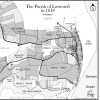
One of the most interesting features of local landscapes during the Late Medieval and Early Modern periods in any community (and Lowestoft was no exception) was the presence of areas not used for agriculture – usually because the soil was unsuitable for crops or too difficult to work, for one reason or another – and being generally referred as either common or waste. The former term referred to the land being available to people for various kinds of use and the latter derived from the Latin word vastus, meaning “empty” or “open”.
The Scores (1582-1756)
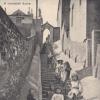
A good deal has been written about the scores over the years - not all of it accurate. What follows here is an account of these footways, working from north to south, and looking at them in both a topographical and historical context. The main sources used for the study are a Manor Roll of 1618 (which gives a complete account of landholding in the parish, together with location and tenancy stated) and a series of Manor Court minute books dating from 1582-85 and 1616-1756.

The Gentle Shining of a Lesser Light (1461)
Faith and Duty opposing Earthly Ambition - A Local Story
Introduction
The Day That Cromwell Came to Town (14 March 1643/4)
The top end of Rant Score – with the road still bearing the name of a family which held all the land between what is now 80 High Street and the score itself, from the end of the 16th century until the middle of the 17th. Looking at both road signs, at the top - with the smaller blue one advising motorists to “Beware oncoming Cyclists” - it is hard to imagine how cars going down the slope would ever be met by cyclists “tanking up” that gradient at any real turn of speed!
The Cocos Island Treasure Hunt (1935)
[First published as the last chapter in the writer’s book The Last Haul (2020).]
Were you ever down the Congo river?
Blow, boys, blow.
Where the fever makes the white man shiver.
Blow, my bully-boys, blow.
(Traditional American capstan song: Blow, Boys, Blow)
Superstition and the Fisherman (c. 1910-1960)
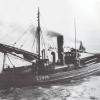
The collection of superstitions which follows is not seen, in any way, as definitive. It simply records a number of the more commonly held beliefs once current in East Anglian fishing communities. Not all of them were peculiar to fishermen only; some had (and may still have) currency among seafarers in general, while others can be traced well inland. But no matter how extensive their area of circulation, all of them are interesting for what they tell us of the human mind and the way it works when faced with natural powers beyond either its understanding or its control.
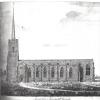
St. Margaret’s Church (c. 1130-1567)
Introduction
The Church of England, as it stands today, is an organisation which originated in the need for a Tudor monarch (Henry VIII) to produce a male heir and secure his family’s tenure of the Crown and which then became part of a North European, Protestant, theological revolution. It is currently undergoing one of its periodic phases of change.
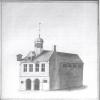
Subscription List for Rebuilding of Town Chamber and Chapel (1698)
Money Received by Captain Andrew Leake towards the Rebuilding of the Chapel (1698)
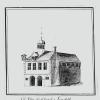
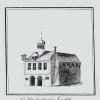
An ink-and-wash study of the Town Chamber, with Chapel to the rear, executed by Richard Powles in 1784. To be found in the Isaac Gillingwater collection of local illustrations c. 1807 - Suffolk Archives, Ipswich, 193/2/1.

Sorting Out the Sinners in the 17th Century (Diocesan Visitations 1606-39)
Ecclesiastical Visitation Material (1606, 1629 & 1633)
Before the Diocese of St. Edmundsbury & Ipswich was created in 1914, Norwich Diocese was one of the largest in England – covering most of Norfolk and Suffolk (with small areas of the western margins of both counties coming under the Ely jurisdiction). Suffolk was divided into two Archdeaconaries: that of Sudbury covering the western half of the county and that of Suffolk covering the east.

Sinking of the Armed Smack Nelson (LT 649) – 15 August 1917
(LT 649)
If upon your port is seen
A little German submarine,
Do not fire shot nor shell.
Just turn around and run like hell!
(Fishermen’s parody of a navigation rhyme)
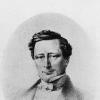
Samuel Morton Peto and the Wider European World (1830-60)
Centuries of Ongoing Change
Denmark Road, Flensburgh Street and Tonning Street: three closely connected roads near the shopping-centre and railway station of the Suffolk coastal town of Lowestoft (the UK’s most easterly community). What possible connection can there be between this trio, the most southerly located of the Scandinavian countries and two towns in the German state of Schleswig-Holstein?

Relocation of the Township (c. 1300-1350)
Reasons for the move
It is perhaps unwise to single out any one particular event in the life of a community over a period of about 1,500 years as being the crucial or formative one (other than its founding), but there is a good case for doing so where Lowestoft is concerned.
Relief of Distress in Other Communities (1681-1698)
Late 17th Century Public Collections Taken in Lowestoft
Regulation of the Lowestoft Community (1550-1750)
The Governors and Governed in Early Modern Times
In the absence of research relating to felony, and with ecclesiastical court records left largely unexplored, the leet court business in Lowestoft (see Manorial Governance) will be used as indicator of attitudes towards the regulation of local society. There were two differing views of the role of the Law current in pre-industrial England, expressed by James Sharpe in Crime in Early Modern England, 1550-1750 (1984), p. 143.
Recorded Immigration Into Lowestoft (1436-1544)
Much is heard today regarding illegal immigration into the UK from across the English Channel and occasionally the North Sea - most of it driven by difficult and dangerous conditions in the particular home countries of origin or by the perceived opportunity to start a more financially rewarding lifestyle than is possible in those same nations.

Recorded Illegitimacy in Lowestoft (1561-1730)
The one thing missing from F.A. Crisp’s printed versions of the Lowestoft Parish Registers (1902) is any reference to the baptisms or burials of any infants born out of wedlock. Yet, such entries are there from the very first year of the first surviving register book: 1561. The best guess as to why this is so is probably to be found in attitudes of the time regarding illegitimacy being widely seen as a social disgrace, together with the more practical matter of who was to be responsible for the raising of the child – if it survived.

Properties on West Side of High Street (1618)
(North of Mariners Street)
- Moving from North to South.
- Occupying former agricultural land and of freehold tenure.
- All properties fronting the High Street.
East end of the North Field
1. John Burgis - house, garden & adjoining arable enclosure (seven-eighths of an acre).
2. Agnes Eastgate - two houses & adjoining garden (half-acre).
Church Way interposing (now St. Margaret’s Road)
3. Thomas Bury - house, curtilage & garden (one acre).

Local Fishing Industry (c. 1910-60) Tape-recording Index
Tape-recordings made 1976-83
The recordings were made with local people, with the intention of producing a sound archive to record an important part of the Lowestoft area’s industrial and maritime history. They form the basis of six published works: The Driftermen (Reading, 1978), The Trawlermen (Reading. 1979), Living From the Sea (Reading, 1982), Following the Fishing (Newton Abbot, 1987), Fishing Talk (Cromer, 2014) and The Last Haul (Lowestoft, 2020).
Markets and Fairs in Lothingland & Lowestoft (1208-1703)
Lothingland
The original grant of a market in Lothingland Half-hundred was made by King John in the year 1211 – three years after Great Yarmouth had received its charter of incorporation (March 1208) with specifically stated preferential trading rights in its own local area. With Crown income solely in mind, the monarch either had no idea of the contention and strife these opposing privileges would cause or was not concerned about them in any way.
Outsider Presence in Lowestoft (1561-1730)
(Parish Register Entries)
The register entries below are presented in as close a way as possible to the original handwritten ones
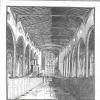
Photo opposite - The interior of St. Margaret’s Church in 1786 - historic repository of the Lowestoft parish registers - captured by Richard Powles (1763-1807). This ink-and-wash study is to be found in Isaac Gillingwater’s ‘Drawings Illustrative of the History of Lowestoft, Mutford and Lothingland’ (Suffolk Archives, Ipswich - ref. no.193/2/1).

Old Town of Lowestoft (High Street HAZ – 14th-19th Century)
A paper written in advance of the creation of the High Street HAZ in 2019
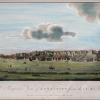
Old Lowestoft – A Case For Heritage Status and Funding (14th – 19th Century)
The High Street area of the modern town is a fine, surviving example of late medieval urban planning, resulting from relocation of the community (between c. 1300-1350) from its original site less than a mile west-south-west of the present one, somewhere in the large municipal cemetery between Normanston Drive and Rotterdam Road. The reasons for the move resulted from a combination of factors.
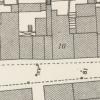
Occupied Ground Space – Nos. 5-25 High Street Plots (1600s to 1700s)
Nos. 5 -25 High Street
Nos. 26-33 are part of an overall sequence of town properties (1-271, in all) showing their transfer, as recorded in the manor court minute books.
They relate specifically to what once occupied the land later taken up by Nos. 5-25 High Street.
Extracted in this form from The Town of Lowestoft c. 1720-25: People and Property in a Pre-Industrial Coastal Community (Lowestoft Heritage Workshop Centre, 2019).
North Denes Liver Trench (1600s & 1700s)
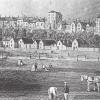
- A large, filled-in trench is visible on the North Denes, a little to the east of the net-drying spars. Its presence is indicated by a slight depression in the ground and by the vegetation growing along its length. The latter is much lusher and of a different type from what is to be found on The Denes generally, showing that the trench’s infill is of a different type from the soil around it.
- The dimensions of this feature were originally eighty to ninety paces in length, on a north-south alignment, and c.

No. 67 High Street (15th-17th Century)
The site of Nos. 64-69 HIGH STREET - occupied by two sets of mid-late 19th century, terraced, triple shop-builds of differing style - was originally one of the largest burgage-plots on the eastern side of the highway (stretching down to Whapload Road) and once occupied by an inn called “The Angel”.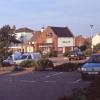
Nature of Farming in Lowestoft (17th & 18th Century)
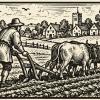
The type of agriculture practised in Lowestoft during the Early Modern era was of mixed variety, as was the case with most other communities in lowland England. And it was not only mixed in combining crops and livestock; it was also mixed in the sense that many of the people who farmed the land had other interests. It is unfortunate that the two key documents which reveal so much about conduct of agriculture in the parish stand in isolation from each other.

Name change…(Danish) – late 9th century
869-70 - Township’s name possibly changed to the Scandinavian form of Hloðver’s toft, following the great Danish invasion of these years. For about 100 years, East Anglia was part of the so-called Danelaw and eight of today’s sixteen parishes in Lothingland have place-names which have Scandinavian elements in one way or another.
They are as follows: Ashby, Corton, Flixton, Gunton, Lound, Lowestoft, Oulton and Somerleyton. There is some debate about Ashby, which may have its first element deriving from Old English aesc, meaning “ash tree”.
Muster Roll (1584)
The national Muster Roll of 16 January 1584 (1583, by Julian Calendar reckoning) was a head-count of all adult males in England between the ages of sixteen and sixty, taking into account their military capability in terms of the weapons they held. It was carried out in anticipation of a possible Spanish invasion, launched across the North Sea from the occupied Netherlands (see Lothingland Invasion Scare of 1584,elsewhere, in the History pages of LO&N).

Muster Roll (1535)
The national Muster Roll of 23 May 1535 was ordered by Henry VIII to take stock of England’s military capability, in terms of the country’s able-bodied adult males and the weaponry they possessed (there being no standing army of any kind) – this in anticipation of possible invasion from abroad, with a coalition of France and Scotland seen as being the likely source of aggression.
Missing Brasses of St. Margaret’s Church (1645)
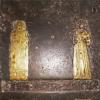
During the period of the two English Civil Wars (1642-46 and 1648) - and both earlier and later on - parish churches up and down the length of the land were visited by authorised (and, in some cases, unauthorised) local inspectors whose task it was to ensure that the worship being carried out was both simple and unadorned, in line with Puritan taste and leanings and free of the “High Church” ritual and practice associated with King Charles I and the Archbishop of Canterbury, William Laud, who was executed for treason by Parliament in January 1645.
Merchant Fleet Details (16th Century)
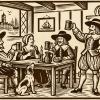
1. Vessels returning from the 1533 Iceland cod fishery voyage: 22 Dunwich, 7 Lowestoft, 7 Orwell Haven [Ipswich] and 1 Orford – making 37 in all. Source: National Archives (Kew), SP 1/80 f.65v.
Lowestoft details
Maritime Trade and the Granting of Port Status (1679)
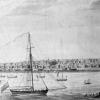
Formal recognition of Lowestoft’s status as a trading port might never have been given in 1679, had the town not managed to free itself from Great Yarmouth’s claim to control all maritime traffic in local waters – especially that connected with the herring trade. Articles relating to this long-running and contentious issue are to be found elsewhere in LO&N’s History pages (The Lothingland-Lowestoft-GreatYarnouth Disputes (Parts 1 & 2) and a summative comment can be added to this.
Manorial courts of Lothingland Half-hundred (Mid-16th to mid-18th Century)
Mid-16th to Mid-18th Century
The Manorial System served both as the foundation of land ownership and management and of maintaining the peace and good order of each local community. It had its origins in Early Medieval times (what was formerly known as the Anglo-Saxon period) and was further shaped and developed following the Norman Conquest – which is now taken as being the start of the Late Medieval era.
Lowestoft’s Nearest Neighbours (Earliest Recorded Details)
1. Gunton
This community did not exist as such at Domesday (1086) and does not appear in surviving documentation (as Guneton) until 1198 – in Feet of Fines material – when William de Heming and Richard de Guneton were engaged in dispute or negotiation of some kind over the ownership of land.
Lowestoft Town Hall (Site and Buildings – 14th -19th Century)
Produced to assist with the building’s regeneration and future uses
1. The Lowestoft community relocated itself (onto what is now the High Street area of a much expanded town) from what was probably its original location about a mile to the south-west, in an area now occupied by a large municipal cemetery between Normanston Drive and Rotterdam Road.

Lowestoft Timeline (c. 700,000 BC/BCE – 1524-5)
700,000 years ago - Early humans (hominids) present, using flint tools in what is now Pakefield. These anthropoids long pre-dated Homo neanderthalensis and Homo sapiens. The cores and flakes found date from roughly halfway through the Lower Palaeolithic age, which stretches from c. 1.5 million to 200,000 years ago.

Lowestoft Timeline (1535 - 1974)
May 1535 - Muster Roll of Lothingland Half-hundred, dated 23rd of the month, listed and named 292 able-bodied men for its defence. Lowestoft provided 130 of these (46%), with three widows included for their late husbands’ weapons. Armaments consisted mainly of bills (a hatchet-like metal attachment on the end of a pole) and bows and arrows, with a minority of the men also possessing helmets and body armour. No firearms are recorded.
Lowestoft Schools (1570-1730)
Annot’s Free Grammar School
The single most important event in the process of public education in Lowestoft during the early modern period came in June 1570, when Thomas Annot (merchant) founded a free grammar school. A summary of the original deed of gift is to be found in the Rev. John Arrow’s Memorandum Book (he was Lowestoft’s parish priest, 1760-89) – Norfolk Record Office - PD 589/92, pp. 13-14. And it is also present in Edmund Gillingwater’s An Historical Account of the Ancient Town of Lowestoft (1790), p. 299.

Lowestoft Rental (1545)
Lowestoft Rental (1545) – Suffolk Archives, Ipswich 194/A10/71
(Formerly North Suffolk Record Office, Lowestoft)
A Lowestoft rental renewed there on the first day of June, in the thirty-seventh year of the reign of our Lord King Henry VIII, by the grace of God King of England, France and Ireland, Defender of the Faith in the said land(s) and Supreme Head of the Church of England and Ireland – relating to the annual rents of the town of Lowestoft, Shadingfield, Ellough and Willingham. [Translated from Latin]
Lowestoft Religious Affiliation (1560-1790)
When Elizabeth I acceded to the English throne in November 1558, she had a number of problems facing her – not the least of which was the matter of what the country’s official brand of the Christian Faith was to be and what form it was to take.

Lowestoft Porcelain: Aspects of Origins, Factory & Workforce (1757-c. 1800)
CREDIT: Ivan Bunn and David Butcher
Origins
This article is in its original form, with minor alterations. It was published (with editorial adjustments and changes) in English Ceramic Circle Transactions, vol. 21 (2010), forming pp. 49-74 of that journal.

Lowestoft Overseers of the Poor Accounts (1656-1712)
The largest administrative task by far to demand both the attention and the time of the parochial authorities in Lowestoft during the Early Modern period was relief of the poor – a weighty responsibility placed upon English parishes by the formative Poor Law Act of 1601. And the fortunate survival of Overseers of the Poor account books for the period 1656-1712 (Suffolk Archives, Ipswich - 01/13/1/1&2) reveals much about the implementation of this legislation.
Lowestoft Occupations (1561-1750)
One of the many interesting features to emerge from the study of Lowestoft’s history over the years, and the attempts to reconstruct aspects of its past arising from the evidence discovered, is the town’s occupational structure. As can be seen in the table below, the main source in all four fifty-year blocks is parish register material, followed by probate documentation (wills and inventories of goods & chattels), with various other sources following on and with the Tithe Accounts featuring strongly in the last sub-period of all.