
More... history

Lowestoft Market and Fairs (1308-1890)
When the Lowestoft township relocated itself onto the cliff-top during the first half of the 14th century, it had considerations to take account of other than the demands created by its inhabitants’ domestic requirements (these being mainly concerned with the terracing of the cliff to make it usable, the laying out of house-plots and a road system, and the management of the scores to give access to the beach and Denes).
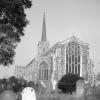
Lowestoft Listed Buildings – Historic England (15th-19th Century)
The Historic England schedule of Listed buildings for Lowestoft (inc. Kirkley, Pakefield. Oulton Broad, Oulton Village & Gunton)
All Grade II unless otherwise indicated
1. Ormiston Denes Academy (original building), Yarmouth Road.
2. Hillingdon, 24 Gunton Cliff.
3. Park Mansions, 3 & 4 North Parade.
4. Wedgewood Court, 1 & 2 North Parade.
5. Ravine Bridge.
6. Belle Vue Park.
7. Patrol Service memorial (Belle Vue Park).
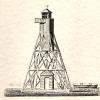
Lowestoft Lighthouses (1609-1975)
Lowestoft’s “High Lighthouse” (as it was once known) had its origins back in the first half of the 17th century
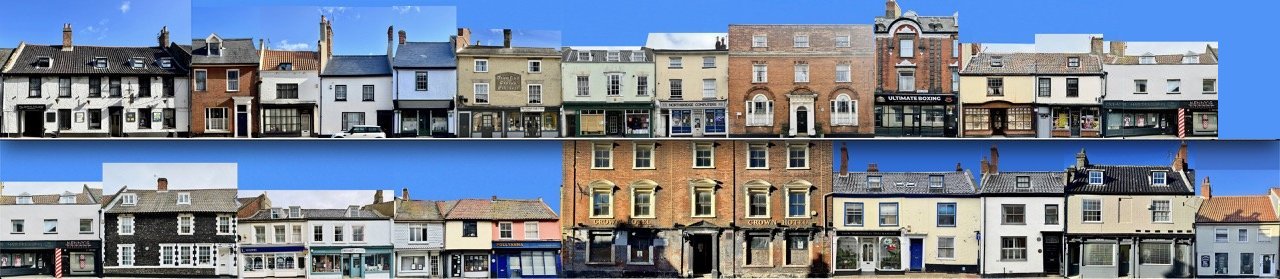
Lowestoft Inns and Shops (16th-18th Century)
Inns
The configuration of roads and the importance of land transport have always been major influences on the development of towns and their inns. Large yards were necessary for stabling horses, and for standing carts and carriages; buildings were required for storing hay and other forage; and provision had to be made for watering the animals. Adequate accommodation was also needed for those people making overnight stops or staying in a place for longer.
Lowestoft and Akethorp (1086-1955)
Lowestoft
The Domesday Survey details (1086) relating to these two communities have been presented and examined in another article, so there is nothing to be gained from repeating what was said there. What can be usefully done, by way of follow-up, is to look at what is known of their function during the centuries following on from William I’s great audit of his realm and reveal something of their manorial status and history.
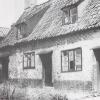
Lowestoft Almshouses (c. 1464-1964)
The first almshouses in Lowestoft were provided by John Manyngham, the parish vicar from 1457-78. The exact year of institution is not known, but they were located on the north side of Fair Lane (now Dove Street) near its junction with West Lane (now Jubilee Way). And they seem to have remained in operation, in some form – undoubtedly with alterations made – into the final quarter of the 19th century, when White’s Directory of Suffolk (1874), p.
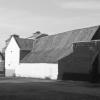
Lowestoft Agriculture (17th & 18th Century)
Grain
The potential value of Tithe Accounts books as a source of information regarding historical agricultural practice has long been recognised. The surviving Lowestoft tithe records (Norfolk Record Office, PD 589/80) begin to record details of agriculture in the parish in the year 1698, but there is no reference to the growing of corn until 1749 – the year in which the Rev. John Tanner began to draw the rectorial tithes.

Lothingland-Lowestoft-Great Yarmouth Disputes – Part 2 (1355-1729)
“All Because of the Herring”
The first part of this extended article (Suffolk Review, Spring 2020) dealt primarily with the commercial and civic contention between Great Yarmouth and its nearest neighbours on the Suffolk side of the River Yare: Gorleston and Little Yarmouth.
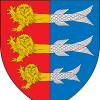
Lothingland-Lowestoft-Great Yarmouth Disputes – Part 1 (1211-1334)
“All Because of the Herring”
Great Yarmouth’s disputes with its near-neighbours in Suffolk, during the Late Medieval and Early Modern periods, are generally well known in outline – if not in detail. The following series of notes (summarised, by the writer, from the sources cited) relates to the long-running conflict between the Norfolk borough and its Suffolk neighbours, regarding the former’s legally granted ommercial rights and its control of the local herring-trade.
Lothingland Invasion Scare (1584)
A constant matter of concern during the reign of Henry VIII (1509-47) was that of foreign invasion - particularly by France with the aid of its ally, Scotland. In 1535, a national audit of England’s defensive ability against foreign aggression was ordered by Henry VIII. With there being no regular Army of any kind at the time, lists had to be made of adult males able to fight in all areas of the country – and it was all done, hundred by hundred, to total up the numbers for every shire.

Literacy Rates in Lowestoft (1560-1730)
Among the many interesting features to emerge from close study of the 507 wills and 100 probate inventories which have survived for the period indicated in the title are the rates of literacy able to be determined in the various occupational groups which formed the town’s socio-economic structure. Even today, there would probably be argument (or at least discussion) among specialists in the field as to what literacy means. The same holds true for historians.
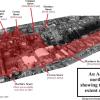
Historic Lowestoft Fires (1645, 1670, 1717 & 1780)
One of the things most dreaded during the Late Medieval and Early Modern periods, in townships of any size with a concentrated nucleus of houses and other buildings, was fire. And so, it can do no harm to start by giving an account of the most disastrous fire to have occurred in Lowestoft throughout throughout the whole of its recorded history.
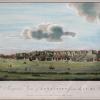
Historical Account of the Denes (14th-18th Century)
The term denes is an earlier version of dunes. It derives from OE dūn, meaning “a hill”, and became applied to coastal sandhills during the late medieval period – being first identified in a printed source dating from the year 1523. In Lowestoft’s case, any undulating effect may never have been very great as a result of tidal action and the effect of the wind, and the progressive development of scrub-growth of one kind and another would have moderated this even further.
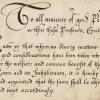
Lowestoft Manorial Governance (c. 1580-1730)
Serious crime, or felony (consisting of treason, murder, assault resulting in serious injury, witchcraft, highway robbery, arson, burglary, rape, grand arceny, forgery, counterfeiting and smuggling) was largely dealt with during the Early Modern period at the six-monthly assizes, held usually in the county towns of the realm. Though some of the offences named, if deemed to have been of a lesser level of seriousness (mainly, matters of assault – including rape – and damage to property), were handled at the three-monthly quarter sessions.
Inventory of James Wilde (1684) – Probate Record
(14 March 1684)
An Inventory Indented of all and singular the goods and Chattels of James Wilde late of Lowestoft in the County of Suff[olk], merchant, valued and appraised the Fourteenth day of March in the year of our Lord One Thousand six hundred eighty three by Joshua Smithson, Nicholas Utting, Robert [? ] and John Aldred of Lowestoft aforesaid, Merchants, as Followeth
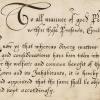
Let This Be a Warning to You (Quarter Sessions Punishment, late 17th Century)
Quarter Sessions Punishment (Lowestoft)
With so much material being available for study of misdemeanour and nuisance (as shown elsewhere in these LO&N pages, in Manorial Governance), the ability to assess the degree of felony among Lowestoft’s inhabitants is made a great deal more difficult by fewer records and by the difficulty of accessing those that do exist.
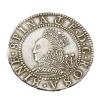
Lay Subsidy (1568)
Authorisation for this Elizabethan taxation was granted by Parliament on 18 December 1566 and the official date of collection was 24 February 1568. Lowestoft’s stated contribution of £34 19s 8d was 47% of the Lothingland total of £74 8s 6d and its 112 tax-payers constituted 42% of the half-hundred’s contributors (267 in number). These figures confirm the town’s dominant position in its local area, just as those of the 1524-5 collection did over forty years earlier. The 1568 Subsidy was structured differently from its predecessor in the way that the assessment was made.

Lay Subsidy (1524-5) – Part 2
Comparisons of Lowestoft with other Suffolk communities
Suffolk’s Top 25 Townships (1524-5 Lay Subsidy) (2) see also (1)
Order by wealth

Lay Subsidy (1524-5) – Part 1
The Lay Subsidy of 1524-5 (1) see also (2)
This national taxation measure was approved by Parliament in 1523, to raise money for war to be waged with France and Scotland (who else!), and with a hoped for total of £800,000 as its aim. As with previous countrywide levies, it was based on the value of lands held and rented out (where this was the major source of income), on movable goods (where these served the same purpose) and on wages for men of labouring or servant status.
Lay Subsidy (1327)
The national tax levied in 1327 to raise revenue for the Crown came at a troubled time for the country, for this was the year in which Edward II was deposed by his wife, Isabella, and her lover, Roger Mortimer, Earl of March – ostensibly, in favour of the future Edward III, who was a fourteen-year-old minor. It was also a time of conflict with Scotland, with an army from north of the border making an incursion into England and engaging with English forces near Stanhope, in County Durham.
Land-use in Lowestoft Parish – 17th & 18th Century
It is unarguable that maritime influences were the major factor in shaping Lowestoft during the Late Medieval and Early Modern periods. Yet, agriculture was also an important element in the development of the town, creating employment for a number of the inhabitants (and limited wealth for a few) and leading to a number of associated trades and occupations. It also acted as a safety-net for the community, something that was always there as part of the economic structure – something that could, in periods of adversity, provide subsistence until better times returned.

Inventory of Roger Hill (1588) – Probate Record
Roger Hill was a Lowestoft merchant of the second half of the sixteenth century, whose burial was recorded in the parish registers on 13 September 1588. He had made his will (Norfolk Record Office, 296 Homes) on 20 August and the inventory of his possessions (NRO INV 4/45) was taken on 16 September. He lived in what is now 31-32 High Street (not at No. 30, as I wrote in error in the LA&LHS Annual Report No.

Inventory of Josiah Wilde (1656) – Probate Record
Original spelling and layout have been adopted throughout for authenticity and reader interest, but square-bracketed monetary values added to assist readability. The reason for using Roman numerals to give values is not known.
Inventory of Elizabeth Pacy (1682) – Probate Record
An Inventory of all and singular the goods and chattels, rights and credits, of Elizabeth Pacy late of Lowestoft in the county of Suffolk, widow, deceased, valued and apprized by John Wilde, Henry Warde, Samuel Smyth, John Aldred, John Fowler and James Pacy the 18th day of August Anno. Dm. 1682 as followeth vizt.
Interior Décor, Fittings and Possessions (Houses, 16th-18th Century)
Lowestoft Houses – 16th-18th Century
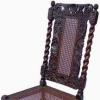
The most commonly mentioned items of interior decoration during the later part of the 16th century, in the houses of the merchants and the better-off tradespeople and craftsmen, are stained or painted canvas cloths. These served to decorate the walls on which they hung and they probably also served as draught-inhibitors. They were present in bedchambers, as well as in halls and parlours, but no indication is given as to whether they had scenes depicted upon them or whether they were simply covered in patterns.
Industries Related to Farming – 17th & 18th Century
Malting and brewing
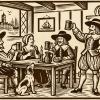
Much of the barley grown in Lowestoft would have been used to make malt, the light soils in the parish producing the thin-skinned, mealy type of grain best suited for the malting process. Altogether, there were at least three or four separate malt-houses in different parts of town, which were in operation at one time or another during the Early Modern period and a similar number attached to the town’s breweries.

Illegal Goings-on in Kirkley Roads (14th & 15th Centuries)
Introduction
Great Yarmouth’s attempted dominance of Lowestoft and control of the latter’s trade only came to an end during the second half of the 17th century, when its legally backed dominance was ended and the Suffolk town placed beyond its jurisdiction.

Hundred Roll of 1274-5
When Henry III died in November 1272, his son and successor Edward (thirty-three years old) was in Sicily, on the way home from fighting in the Seventh – and last – Crusade. A hardened warrior of many years experience, it wasn’t until the year 1274 that he finally reached England to take up his throne, with the coronation being held in Westminster Abbey on 19 August. He went on to subjugate Wales, invade Scotland (becoming known as “the Hammer of the Scots”) and generally impose his presence on all around him – his impressive height of 6’ 2” gaining him the nickname of “Longshanks”.
Human Migration into Lowestoft (1696-1735)
In 1662, an Act of Settlement for the Better Relief of the Poor was passed by Parliament – a measure soon to become known as the Act of Settlement and Removal, as it aimed at restricting the movement of people from the parishes where they were living in a state of poverty into ones (nearby or further removed) where they believed that they would be better off.

Historic England Building Listings: Additional Material
Lothingland Half-hundred
1. Ashby: St. Mary’s Church.
2. Belton: All Saints Church – Old Hall – Browston Hall.
3. Blundeston: St. Mary’s Church – The Rookery – The Pound – Blundeston House – The Plough inn.
4. Bradwell: St. Nicholas’s Church – Bradwell Hall – Hobland House.
5. Burgh Castle: St. Peter’s & St. Paul’s Church – Old Hall Farm – The Grange – Roman Shore Fort Gariannonum.
Hearth Tax of 1674
Hearth Tax, as a means of raising money for The Crown, was introduced into England following the Restoration of the Monarchy under Charles II in 1660. It functioned on the principle of being a wealth tax, in that the number of fire-places in a house was taken as indicating the affluence of the occupant. The greater the number of rooms heated, the richer that householder was assumed to be – either as owner or renter.
Great Plague of Lowestoft (1603)
Many readers will know know something of London’s so-called “Great Plague”, which began in May 1665 and stretched into January 1666, and in which an estimated 100,000 people may have died out of a population of 350,000-400,000. A total of 68,596 burials is accounted for in parish records, but so intense was the rate of death from July to September that many people’s burials went unrecorded.
Good Cross Chapel (Late 13th-Late 18th Century?)
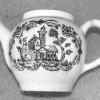
The foundation called the Good Cross Chapel is a lesser-known part of Lowestoft’s religious history, which once stood in the extreme south-eastern corner of the parish near the junction of the present-day Suffolk Road with Battery Green Road – possibly in the location of what is now the Fish Market entrance.
Freshwater Fishery (Late 16th-mid 17th Century)
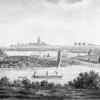
The large expanse of water on Lowestoft parish’s southern boundary provided a freshwater fishery for coarse fish, which had nothing to do with the town’s commercial sea-fishing activities. The mere was always referred to as the Great Water or the Fresh Water during the 16th,17th and 18th centuries (and probably before that, as well) – later becoming known as Lake Lothing during the earlier part of the 19th.

Founding of Lowestoft as Hluda’s toft (mid-late 500s)
Mid-late 6th century? - Founding of Lowestoft as Hluda’s toft, meaning “the homestead of Hluda” - with Hluda itself translatable as “the loud one”. On the evidence of the layout of ancient tracks and other landscape features, the location was possibly somewhere in the north-eastern sector of what is now Normanston Cemetery.
Fishing Seasons, Catching Methods & Curing (Mid 16th-Early 18th Century)
The Cod Voyages
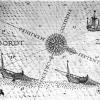
The spring and early summer sailing to Faeroe and Iceland from East Coast ports (line-fishing for cod and ling) may have begun as early as the beginning of the 15th century – possibly in the Scarborough area – and was a well-established feature by the start of the 16th. Lowestoft’s involvement is proven, but it is not possible to say how many vessels were regularly involved and over what sequence of years they were sent.
Fishing and Maritime Trade (Late 16th-Early18th Century)
Introduction
First of all, reference has to be made to the geographical advantages of Lowestoft’s position on the East Coast. A substantial number of its male inhabitants made a living from going to sea, while others remained on shore and earned money from processing catches of fish and handling other cargoes. A select minority of these latter even grew wealthy through maritime activity, because they were the people who owned the vessels which caught herrings and cod or which carried merchandise of different kinds.
Early Modern Lowestoft (Mid 18th Century)
Mid-Late 18th Century Urban Status and Identity
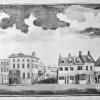
The field of study constituting urban history is both complex and wide-ranging, combining a variety of sources and a number of disciplines. Economic and social history may unite in helping to explain and illuminate a community’s existence and function, but integration with historical geography and demographic features is required in order to produce a deeper understanding of the human activity which created that entity.
Domesday Survey (1086)
Domesday Lowestoft (1)
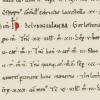
The further back in history that any researcher tries to go, the more difficult it is to make progress because of diminishing, usable, documentary sources. This is what makes Domesday Book so valuable.
Dickens, Lowestoft and David Copperfield (1849)
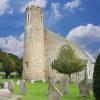
The Novel David Copperfield is well known for its central figure’s connection with Blundeston, Great Yarmouth and the Peggotty family – but, scarcely known at all for David’s brief acquaintance with the town of Lowestoft, as revealed in Chapter 2 of the novel.
Death on the Denes (1666)
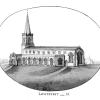
Some idea of the vulnerability of the Lothingland coastline during times of trouble may be had from an incident which occurred during the Second Dutch War (1665-67). The Lowestoft parish registers have this entry, made on 7 February 1666 [1665, in the old-style calendar]: “Maijer Thomas Willd of Yarmouth, was kild at Corton by a musket shot that went into wessan”. The grave-slab of this man is set into the floor of the middle aisle of St. Margaret’s Church, not far from the chancel screen and next to that of his parents, John and Mary Wild(e).
Compass Street (14th-19th century)
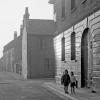
Compass Street originally formed one track with Dove Street - known as Bier Lane during the 14th century, because it was the track by which corpses (placed on a hand-bier) were taken from town for burial in St. Margaret’s churchyard. The track extended westwards over Church Green, more or less following the line of what became - much later on - Wesley Street and Church Road. During the 16th and 17th century, the named changed to both Fair(stead) Lane and Almshouse Lane, since the annual fairs were held on Fair Green (which is the St.
Churchwarden Accounts (1714-36)
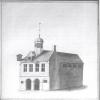
The pages reproduced below, in as near as possible their original format, are to be found in volume 3, section 4, of Robert Reeve’s four volume manuscript ‘A History of Lowestoft and Lothingland’ (c. 1810) – Suffolk Archives (Ipswich), 193/3/4. Nothing is recorded for the years 1719, 1722, 1728 and 1733. Reeve (a local solicitor), who lived at No. 49 High Street, was steward of the manor and he must have transcribed this material from an original source of some kind.
Brewing in Lowestoft (1560-1760)
The Town of Lowestoft c. 1720
This map was created by Ivan Bunn (former archival assistant at the North Suffolk Record Office, Lowestoft) and the writer, working in collaboration and using manorial documentation as the primary source. See end of text for numbered locations, which are also referred to in the narrative.

Bequests for the Relief of Poverty, 1560-1730
For centuries, the use of alms boxes in parish churches throughout the whole of England was a means of collecting sums of money for charitable purposes – particularly the relief of poverty where it was known or seen to exist. During the 16th century, as a result of general cost inflation (aggravated by Henry VIII’s mindless extravagance and debasement of the coinage, to say nothing of the social and economic problems caused by the Dissolution of the Monasteries), the alleviation of financial distress in the lower levels of society became more and more of a challenge.

Before There Were Banks (Credit Provision 1585-1730)
Provision of credit in the community
The importance of scriveners as community bankers in London during the second half of the 17th century has been noted, as has their role as providers of funds elsewhere. Nor has the function of the goldsmith escaped attention. Lowestoft, being a town of modest size, had few named scriveners among its inhabitants (no more than six or seven have been identified between 1560 and 1730) and most of them had other occupations.
Battle of Lowestoft Medallion (1665)
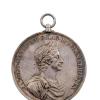
On Tuesday 23 April, 2024, a silver medallion commemorating the naval victory of the English fleet over that of the United Provinces of the Netherlands during the Second Dutch War (1665-67) was offered for sale at an auction staged by Charles Millar of Fulham, specialists in maritime and scientific models, instruments and fine art. It fetched the sum of £550, plus seller’s and buyer’s commission.
Apprenticing of Poor Children (1699-1730)
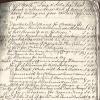
The details which follow are presented as closely as possible to how they appear in the Lowestoft Settlement and Apprenticeship Book: Suffolk Archives, Ipswich - 01/13/1/3. But, it has not been possible to replicate completely an identical layout of the document. Original spelling has been maintained and use made of square brackets to provide extra information and clarify matters where needed. Mauve-coloured highlighting is intended to make the individual years and other dates immediately visible.
Animal Husbandry in Lowestoft (17th & 18th century)
Cattle
The amount of grassland of one kind or another revealed in the 1618 Manor Roll (about 170 acres), when compared with that discernible in the 18thcentury Tithe Accounts (about sixty-five acres of permanent pasture, or meadow, and an annual average of twenty-eight acres of the sown variety) may appear to suggest that fewer cattle were being kept in the parish by 1700 than had been the case one hundred years before.