
More... history
Industrial Great Britain: A Commercial Review of Leading Firms 1894
T. E. THIRTLE, GENERAL AND FURNISHING IRON-MONGER, AND BELLHANGER,45, HIGH STREET, LOWESTOFT.
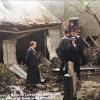
Buildings bombed by Zeppelins
The 620 ft (189 metres) Zeppelin L5, captained by Alois Boecker, was heard near Dunwich on the night of 15 to 16 April.
It dropped its bombs on Suffolk including at Henham Hall and the railway station at Southwold, before attacking Lowestoft at 01:15 BST.
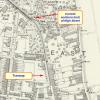
Houses in Denmark Road were hit, and what we know, perhaps, as the Menzies building by the signal box in Denmark Road, was also damaged. This building was stables for GER.
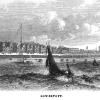
1850 book - Lowestoft with details of the new route to Denmark
“Lowestoft has of late assumed so prominent a status, not merely among the new watering-places which have acquired more or less popularity within the last few years, chiefly owing to the extension of facilities for railway travelling, but as the entrepôt of the important traffic now being developed between Northern Europe and this country, that a " Guide" to it should be prefaced with something a little more discursive than a purely local introduc-With this view.
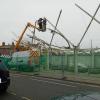
Triangle Sails Torn Down
Workmen are busy taking down the roof of the Triangle Sails, and have started to saw down the metal framework.
So far, the trees are still standing.
Lowestoft Town Council intends to improve the area by removing the sails, the structure, and two of the trees. They intend to replace the trees with other, smaller trees.
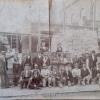
1900 Town Hall Builders
Thanks to Marion Hayes for an excellent photo from early 1900’s showing building work on the Town Hall. We had been struggling to find ANY front on old images for this historic building. Now it is pride of place on our stroll
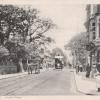
Decision taken to pull the plug on tram system
1930 The Corporation saw the spark was failing, and decided to abandon the tram system
End of the Lowestoft Trams
1931 8th May saw the last ever Lowestoft tram service, driven by the oldest driver who had been with the service since 1903. In almost 28 years the trams had carried around 80 million passengers, and driven about 8 million miles.


Destroyed by fire
Lowestoft was badly damaged in a substantial fire in 1645. Beginning in a fish house at the base of Lighthouse Score, buildings as far south as Rant Score and to the west of High Street around Crown Street were damaged or destroyed.
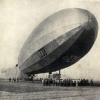
Zeppelin was shot down
Zeppelin was shot down over the sea near Lowestoft, the date of which coming close to the moment when Robert Leckie arrived at the station and yet to make his mark and be known as one of “the Zeppelin killers from Canada”.
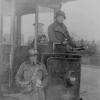
Lowestoft Trams employ women
1914 - 1918 First World War eventually meant that Lowestoft Corporation Transport trams women drivers, inspectors and conductors were introduced
Almost Trolley buses
1920 - The Corporation installed poles and span wires were erected for trolleybuses. But the overhead wires were never installed, and trolley buses never graced our streets.
First Bus service introduced
1927 The first Corporation bus service was introduced, along the seafront. The redundant trolleybus poles were used for street lighting.
More Bus Services introduced
1928 The bus service was extended to other areas, and in 1929 it was introduced along the route of the tramway.
Tramway built
Early in 1903 construction started of the Tramway from Florence Road in Pakefield to Yarmouth Road in north Lowestoft. A spur was built along Denmark Road to the tramshed (still there)in Rotterdam Road
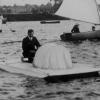
hydroplane invented on Lake Lothing
In the autumn of 1908 a hydroplane of the two-plane variety was tried with success on the Norfolk Broads, and over 20 miles per hour was reached with only 12 H.P. Surprise, as the little craft was named, was owned by Mr. M. Brooke, of Lowestoft, and had a length of 13 ft., with a 5 ft. 6 in. beam. She was built purely for experimental purposes, so did not take part in any of the public speed contests.
New Lowestoft High Light House built
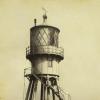
1872 - 74 The present High Light was built. It had a new optical revolving light, flashing at half-minute intervals.
Lowestoft Low Light House moved
1881 Low Light now also flashes. And had to be moved 80 yards inland, because of erosion.
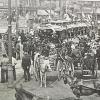
A Brief History of Lowestoft Trams
Early in 1903 construction started of the Tramway from Florence Road in Pakefield to Yarmouth Road in north Lowestoft. A spur was built along Denmark Road to the tramshed (still there)in Rotterdam Road. It was 3 ft 6 ins gauge, with the rails imported from Germany.
Low Light rebuilt with brick foundation
1832 Low Light rebuilt with brick foundation to stop it falling into the sea
Pakefield get their own Lighthouse
1832 Pakefield Lighthouse (red light) built to help navigate through the channel between the Barnard and Newcombe Sands. The station was made of brick.
Pakefield Light House moved
1850 Pakefield Light House moved to Kessingland because the channel had shifted. The Pakefield LH tower is still there, in the holiday centre. The light was finally extinguished in 1864.
Pepys builds the High Light
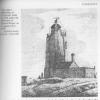
1676 Samuel Pepys was elected a Master of the Trinity Brethren, and immediately sanctioned a new Lowestoft lighthouse. A new Lighthouse tower was constructed, built of brick, this time on the cliffs. This became known as Lowestoft High Light. Trinity in its earlier records sometimes refers to the northernmost of the two Ness Point foreshore lights as the 'upper' light, which can be confusing.(drawing p93).
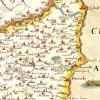
Christopher Saxton map showed
Christopher Saxton map showed Easton Ness as the most easterly point of Great Britain. Over the next decades, the action of the sea caused the salient to migrate north, to Lowestoft Ness.
Pakefield Lighthouse Extinguished for good
As the sandbanks shifted and Pakefield lighthouse was declared redundant and closed in 1864. The lighthouse’s 10m high tower has since been used as a war-time oservation post, store-room and holiday camp darkroom.
Low Light washed away?
1706 the remaining Low Light ceased operation, possibly because "...the sea overwhelmed it..." (p97 Lights of East Anglia by Neville Long, 1983)
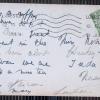
Lowestoft High Light 1914 and World War One
This postcard is amazingly franked 31st July 1914, just four days before Britain declared war . The message reads "Having a [illegible] time here. [Illegible illegible] great excitement in the camp here about the war. We are [illegible] to a nice? tea."
Lowestoft's Harbour Created
Inland harbour created by joining Lake Lothing with North Sea. Before that, everything was done on the beach. The inner harbour is formed by Lake Lothing whilst the outer harbour is constructed from breakwaters.
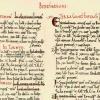
Recorded in Domesday book
The Domesday Book gives Lothuwistoft village a population of some 16 households in three families, with ten smallholders and three slaves.
Lowestoft’s name is derived from the Viking personal name Hlothver, and toft, a Viking word for 'homestead'. The town's name has been spelt variously: Lothnwistoft, Laistoe, Lestoffe, Loystoft and Laystoft.
** see this on our history timeline ***
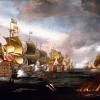
naval Battle of Lowestoft
The naval Battle of Lowestoft in June 1665 was the first of the Second Anglo-Dutch War. Held 40 miles (64 km) off the coast, it was a clear victory for the English over the Dutch.
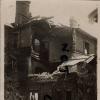
Bombarded by German Navy
Lowestoft was bombarded by the German Navy on 24 April 1916 in conjunction with the Easter Rising.
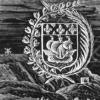
The Second Light House in Great Britain
#LowestoftDaysOfChristmas 7th day.. SECOND LIGHTHOUSE "Lowestoft...oldest established Lighthouse Station in Great Britain" (Caister had the first Trinity House leading lights (1607) - and Lowestoft was second (1609))
This is a timeline of Lowestoft's Lighthouse Stations.
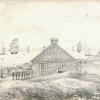
Fish-house entirely washed away
When a fish-house, in the southern part of the town, was entirely washed away, and another fish-house and barn were so exceedingly damaged, as to make it necessary to have them taken down. credit:Gillingwaters History of Lowestoft.
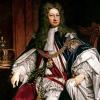
King George II shipwrecked
On this day King George II was rescued from the sea on Lowestoft beach in 1737.
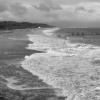
Eleni V Oil update
Way back in January storms revealed some of the buried remains of the Eleni V disaster.
East Suffolk Council have commissioned specialists to properly investigate how much oil remains and and to provide evidence for next steps.
Councillor James Mallinder, cabinet member for the Environment added: “Any excavations at the site may affect the rate of coastal erosion, and the surrounding environment, and so any decision about removing the deposits will be carefully considered.”
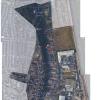
North Lowestoft Heritage Action Zone (HAZ)
North Lowestoft Heritage Action Zone "The North Lowestoft Heritage Action Zone (HAZ) covers Lowestoft High Street and Scores, the Sparrow’s Nest Park and the Whapload Road area. The aim of the HAZ is to promote the renovation and repair of historic buildings and public spaces to stimulate the economic revival of the area.
The Lowestoft Light re-built again
1670's The Lowestoft Lights were re-built again. A few years previously John Clayton had erected a coal-light a couple of miles north at Corton. Clayton's efforts to build lighthouses at various locations around the coast were seen by Trinity Brethren as being a threat to their monopoly.

Flag men of Lowestoft painting
Thirty-three years after she first prepared Lely’s Flagmen of Lowestoft for display, Senior Paintings Conservator Elizabeth Hamilton-Eddy prepares them for the Queen’s House.
credit: National Maritime Museum
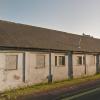
Somewhere over the railway...
North Lowestoft Men's Shed is working hard to find somewhere to be.
On Denmark Road there's a old, empty warehouse. It's owned by Network Rail. It would make a great green Shed.
Network Rail are thinking of demolishing it. But NLMS is in the mix and fighting hard. We're negotiating, and meeting Network Rail on the premises sometime in the week beginning 21st June.
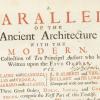
1733 book signed by Lowestoft Architect
Heritage Auctions, HA.com have kindly sent us high resolution images of a famous book actually signed by Lowestoft architect George Glover (1811-1890) Book: A parallel of the ancient architecture with the modern (1773)

New tourist information office opens
It means that for the first time in five years, Lowestoft now has its own dedicated, large-scale tourist information office once more.
Mr Aldous met some of the volunteer team that have helped to open, and will run, the new facility.
Martin Halliday, Community Rail Norfolk Development Officer, said: “We have had a steady flow of visitors all morning and have received some lovely comments about the new facility with many people delighted that Lowestoft has its own Tourist Information Office once again.”