
1600s
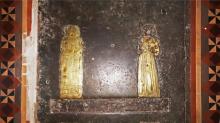
During the period of the two English Civil Wars (1642-46 and 1648) - and both earlier and later on - parish churches up and down the length of the land were visited by authorised (and, in some cases, unauthorised) local inspectors whose task it was to ensure that the worship being carried out was both simple and unadorned, in line with Puritan taste and leanings and free of the “High Church” ritual and practice associated with King Charles I and the Archbishop of Canterbury, William Laud, who was executed for treason by Parliament in January 1645.
Added: 27 April, 2024
May 1535 - Muster Roll of Lothingland Half-hundred, dated 23rd of the month, listed and named 292 able-bodied men for its defence. Lowestoft provided 130 of these (46%), with three widows included for their late husbands’ weapons. Armaments consisted mainly of bills (a hatchet-like metal attachment on the end of a pole) and bows and arrows, with a minority of the men also possessing helmets and body armour. No firearms are recorded.
Added: 14 April, 2024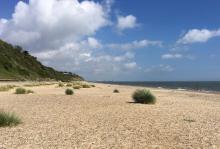
“All Because of the Herring”
The first part of this extended article (Suffolk Review, Spring 2020) dealt primarily with the commercial and civic contention between Great Yarmouth and its nearest neighbours on the Suffolk side of the River Yare: Gorleston and Little Yarmouth.
Added: 13 April, 2024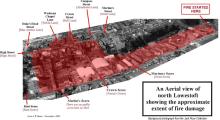
One of the things most dreaded during the Late Medieval and Early Modern periods, in townships of any size with a concentrated nucleus of houses and other buildings, was fire. And so, it can do no harm to start by giving an account of the most disastrous fire to have occurred in Lowestoft throughout throughout the whole of its recorded history.
Added: 5 April, 2024
The top end of Rant Score – with the road still bearing the name of a family which held all the land between what is now 80 High Street and the score itself, from the end of the 16th century until the middle of the 17th. Looking at both road signs, at the top - with the smaller blue one advising motorists to “Beware oncoming Cyclists” - it is hard to imagine how cars going down the slope would ever be met by cyclists “tanking up” that gradient at any real turn of speed!
Added: 2 April, 2024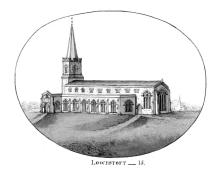
Some idea of the vulnerability of the Lothingland coastline during times of trouble may be had from an incident which occurred during the Second Dutch War (1665-67). The Lowestoft parish registers have this entry, made on 7 February 1666 [1665, in the old-style calendar]: “Maijer Thomas Willd of Yarmouth, was kild at Corton by a musket shot that went into wessan”. The grave-slab of this man is set into the floor of the middle aisle of St. Margaret’s Church, not far from the chancel screen and next to that of his parents, John and Mary Wild(e).
Added: 1 April, 2024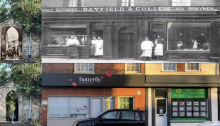
#LowestoftDaysOfChristmas 10th day.. FROM SWAN INN and CROMWELL's HQ to well loved shops in many guises. Nos. 41-42 High Street, as seen today, are replacement buildings for "The Swan" inn, which once occupied the site and served as one of Lowestoft's premier hostelries during the 16th and 17th centuries. It was where Oliver Cromwell stayed overnight on 14 March 1643/44, when he came to Lowestoft (from Cambridge) with a force of cavalry, having heard tell of a shipment of arms either entering or leaving the town (it has never been established which).
Added: 21 December, 2023