
1700s
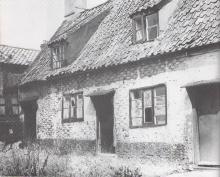
Robert Reeve (local lawyer), who lived at what is now No. 49 High Street and who had his office next door at No. 48, was steward of the Lowestoft manor during the late 18th and early 19th century. Among the many things he did, connected with the history of the town (and also with that of Lothingland Half-hundred) was to compile a four-volume, handwritten account of various aspects of their past, connected with manorial and parochial matters of all kinds. Dated at c.
Added: 15 May, 2025
Quarter Sessions Punishment (Lowestoft)
With so much material being available for study of misdemeanour and nuisance (as shown elsewhere in these LO&N pages, in Manorial Governance), the ability to assess the degree of felony among Lowestoft’s inhabitants is made a great deal more difficult by fewer records and by the difficulty of accessing those that do exist.
Added: 1 May, 2025
The Governors and Governed in Early Modern Times
In the absence of research relating to felony, and with ecclesiastical court records left largely unexplored, the leet court business in Lowestoft (see Manorial Governance) will be used as indicator of attitudes towards the regulation of local society. There were two differing views of the role of the Law current in pre-industrial England, expressed by James Sharpe in Crime in Early Modern England, 1550-1750 (1984), p. 143.
Added: 1 May, 2025
Mid-16th to Mid-18th Century
The Manorial System served both as the foundation of land ownership and management and of maintaining the peace and good order of each local community. It had its origins in Early Medieval times (what was formerly known as the Anglo-Saxon period) and was further shaped and developed following the Norman Conquest – which is now taken as being the start of the Late Medieval era.
Added: 24 March, 2025
The one thing missing from F.A. Crisp’s printed versions of the Lowestoft Parish Registers (1902) is any reference to the baptisms or burials of any infants born out of wedlock. Yet, such entries are there from the very first year of the first surviving register book: 1561. The best guess as to why this is so is probably to be found in attitudes of the time regarding illegitimacy being widely seen as a social disgrace, together with the more practical matter of who was to be responsible for the raising of the child – if it survived.
Added: 12 March, 2025
When Elizabeth I acceded to the English throne in November 1558, she had a number of problems facing her – not the least of which was the matter of what the country’s official brand of the Christian Faith was to be and what form it was to take.
Added: 2 March, 2025
Annot’s Free Grammar School
The single most important event in the process of public education in Lowestoft during the early modern period came in June 1570, when Thomas Annot (merchant) founded a free grammar school. A summary of the original deed of gift is to be found in the Rev. John Arrow’s Memorandum Book (he was Lowestoft’s parish priest, 1760-89) – Norfolk Record Office - PD 589/92, pp. 13-14. And it is also present in Edmund Gillingwater’s An Historical Account of the Ancient Town of Lowestoft (1790), p. 299.
Added: 21 February, 2025
Among the many interesting features to emerge from close study of the 507 wills and 100 probate inventories which have survived for the period indicated in the title are the rates of literacy able to be determined in the various occupational groups which formed the town’s socio-economic structure. Even today, there would probably be argument (or at least discussion) among specialists in the field as to what literacy means. The same holds true for historians.
Added: 18 February, 2025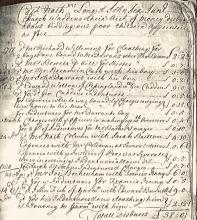
The details which follow are presented as closely as possible to how they appear in the Lowestoft Settlement and Apprenticeship Book: Suffolk Archives, Ipswich - 01/13/1/3. But, it has not been possible to replicate completely an identical layout of the document. Original spelling has been maintained and use made of square brackets to provide extra information and clarify matters where needed. Mauve-coloured highlighting is intended to make the individual years and other dates immediately visible.

The largest administrative task by far to demand both the attention and the time of the parochial authorities in Lowestoft during the Early Modern period was relief of the poor – a weighty responsibility placed upon English parishes by the formative Poor Law Act of 1601. And the fortunate survival of Overseers of the Poor account books for the period 1656-1712 (Suffolk Archives, Ipswich - 01/13/1/1&2) reveals much about the implementation of this legislation.
Added: 26 January, 2025