
Eras
Visit our new project Our Fallen. This section includes Wartime, Pre-History and Medieval. Try the Wartime Timeline to look at some key dates in our history

This is a chronological account of Lowestoft's Triangle Market, which has been in existence for over 700 years.
1208 King John issued Charter to Great Yarmouth creating Great Yarmouth as a free Burgh and other useful things, but were “...not being allowed to receive any custom of goods bought or sold in the market in Lothingland at any time of the year.” (Gillingwater's History of Lowestoft A reprint: with a chapter of more recent events by AE Murton 1897)
1251 Kessingland Market Charter granted in the reign of Henry 111
Added: 23 September, 2023
A piece of railway history has returned to Lowestoft with a new sign installed at Coke Ovens Junction, half a mile to the west of the town’s railway station. The name of the junction disappeared in 1970 when the Lowestoft to Great Yarmouth line closed.
Added: 23 September, 2023
It means that for the first time in five years, Lowestoft now has its own dedicated, large-scale tourist information office once more.
Mr Aldous met some of the volunteer team that have helped to open, and will run, the new facility.
Martin Halliday, Community Rail Norfolk Development Officer, said: “We have had a steady flow of visitors all morning and have received some lovely comments about the new facility with many people delighted that Lowestoft has its own Tourist Information Office once again.”
Added: 23 September, 2023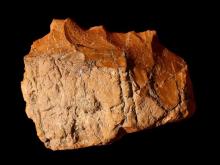
Scientists have unearthed a collection of fossilised stone tools in · East Anglia marking the earliest evidence of human activity in northern Europe Scientists have unearthed a collection of fossilised stone tools in East Anglia marking the earliest evidence of human activity in northern Europe. The finding puts our ancestors on the map of what is now Britain some 700,000 years ago, when Suffolk was warmed by a Mediterranean climate and sabre-tooth cats, elephants and giant deer roamed free.
Added: 23 September, 2023
Three maps of our Historic High Street, showing the Tramway.
Added: 23 September, 2023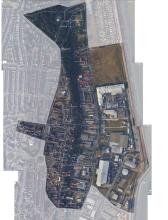
North Lowestoft Heritage Action Zone "The North Lowestoft Heritage Action Zone (HAZ) covers Lowestoft High Street and Scores, the Sparrow’s Nest Park and the Whapload Road area. The aim of the HAZ is to promote the renovation and repair of historic buildings and public spaces to stimulate the economic revival of the area.
Added: 23 September, 2023
Heritage Auctions, HA.com have kindly sent us high resolution images of a famous book actually signed by Lowestoft architect George Glover (1811-1890) Book: A parallel of the ancient architecture with the modern (1773)
Added: 23 September, 2023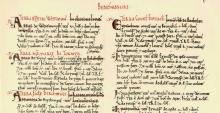
The Domesday Book gives Lothuwistoft village a population of some 16 households in three families, with ten smallholders and three slaves.
Lowestoft’s name is derived from the Viking personal name Hlothver, and toft, a Viking word for 'homestead'. The town's name has been spelt variously: Lothnwistoft, Laistoe, Lestoffe, Loystoft and Laystoft.
** see this on our history timeline ***
Added: 23 September, 2023
On this day King George II was rescued from the sea on Lowestoft beach in 1737.
Added: 23 September, 2023