
Eras
Visit our new project Our Fallen. This section includes Wartime, Pre-History and Medieval. Try the Wartime Timeline to look at some key dates in our history

It is unarguable that maritime influences were the major factor in shaping Lowestoft during the Late Medieval and Early Modern periods. Yet, agriculture was also an important element in the development of the town, creating employment for a number of the inhabitants (and limited wealth for a few) and leading to a number of associated trades and occupations. It also acted as a safety-net for the community, something that was always there as part of the economic structure – something that could, in periods of adversity, provide subsistence until better times returned.
Added: 23 August, 2025
Grain
The potential value of Tithe Accounts books as a source of information regarding historical agricultural practice has long been recognised. The surviving Lowestoft tithe records (Norfolk Record Office, PD 589/80) begin to record details of agriculture in the parish in the year 1698, but there is no reference to the growing of corn until 1749 – the year in which the Rev. John Tanner began to draw the rectorial tithes.
Added: 18 August, 2025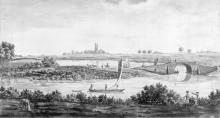
The large expanse of water on Lowestoft parish’s southern boundary provided a freshwater fishery for coarse fish, which had nothing to do with the town’s commercial sea-fishing activities. The mere was always referred to as the Great Water or the Fresh Water during the 16th,17th and 18th centuries (and probably before that, as well) – later becoming known as Lake Lothing during the earlier part of the 19th.
Added: 1 August, 2025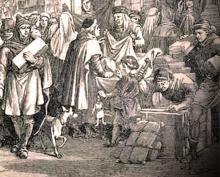
1. Vessels returning from the 1533 Iceland cod fishery voyage: 22 Dunwich, 7 Lowestoft, 7 Orwell Haven [Ipswich] and 1 Orford – making 37 in all. Source: National Archives (Kew), SP 1/80 f.65v.
Lowestoft details
Added: 15 July, 2025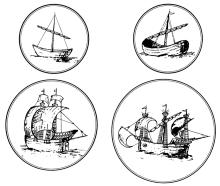
Introduction
First of all, reference has to be made to the geographical advantages of Lowestoft’s position on the East Coast. A substantial number of its male inhabitants made a living from going to sea, while others remained on shore and earned money from processing catches of fish and handling other cargoes. A select minority of these latter even grew wealthy through maritime activity, because they were the people who owned the vessels which caught herrings and cod or which carried merchandise of different kinds.
Added: 13 July, 2025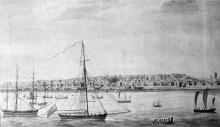
Formal recognition of Lowestoft’s status as a trading port might never have been given in 1679, had the town not managed to free itself from Great Yarmouth’s claim to control all maritime traffic in local waters – especially that connected with the herring trade. Articles relating to this long-running and contentious issue are to be found elsewhere in LO&N’s History pages (The Lothingland-Lowestoft-GreatYarnouth Disputes (Parts 1 & 2) and a summative comment can be added to this.
Added: 1 June, 2025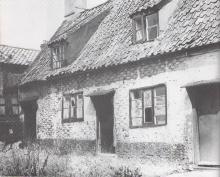
Robert Reeve (local lawyer), who lived at what is now No. 49 High Street and who had his office next door at No. 48, was steward of the Lowestoft manor during the late 18th and early 19th century. Among the many things he did, connected with the history of the town (and also with that of Lothingland Half-hundred) was to compile a four-volume, handwritten account of various aspects of their past, connected with manorial and parochial matters of all kinds. Dated at c.
Added: 15 May, 2025
Late 17th Century Public Collections Taken in Lowestoft
Added: 6 May, 2025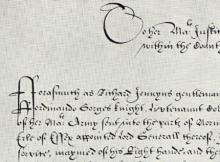
Quarter Sessions Punishment (Lowestoft)
With so much material being available for study of misdemeanour and nuisance (as shown elsewhere in these LO&N pages, in Manorial Governance), the ability to assess the degree of felony among Lowestoft’s inhabitants is made a great deal more difficult by fewer records and by the difficulty of accessing those that do exist.
Added: 1 May, 2025
The Governors and Governed in Early Modern Times
In the absence of research relating to felony, and with ecclesiastical court records left largely unexplored, the leet court business in Lowestoft (see Manorial Governance) will be used as indicator of attitudes towards the regulation of local society. There were two differing views of the role of the Law current in pre-industrial England, expressed by James Sharpe in Crime in Early Modern England, 1550-1750 (1984), p. 143.
Added: 1 May, 2025