
Eras
Visit our new project Our Fallen. This section includes Wartime, Pre-History and Medieval. Try the Wartime Timeline to look at some key dates in our history

For centuries, the use of alms boxes in parish churches throughout the whole of England was a means of collecting sums of money for charitable purposes – particularly the relief of poverty where it was known or seen to exist. During the 16th century, as a result of general cost inflation (aggravated by Henry VIII’s mindless extravagance and debasement of the coinage, to say nothing of the social and economic problems caused by the Dissolution of the Monasteries), the alleviation of financial distress in the lower levels of society became more and more of a challenge.
Added: 1 January, 2025
Centuries of Ongoing Change
Denmark Road, Flensburgh Street and Tonning Street: three closely connected roads near the shopping-centre and railway station of the Suffolk coastal town of Lowestoft (the UK’s most easterly community). What possible connection can there be between this trio, the most southerly located of the Scandinavian countries and two towns in the German state of Schleswig-Holstein?
Added: 16 December, 2024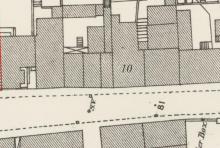
Nos. 5 -25 High Street
Nos. 26-33 are part of an overall sequence of town properties (1-271, in all) showing their transfer, as recorded in the manor court minute books.
They relate specifically to what once occupied the land later taken up by Nos. 5-25 High Street.
Extracted in this form from The Town of Lowestoft c. 1720-25: People and Property in a Pre-Industrial Coastal Community (Lowestoft Heritage Workshop Centre, 2019).
Added: 4 December, 2024

(North of Mariners Street)
- Moving from North to South.
- Occupying former agricultural land and of freehold tenure.
- All properties fronting the High Street.
East end of the North Field
1. John Burgis - house, garden & adjoining arable enclosure (seven-eighths of an acre).
2. Agnes Eastgate - two houses & adjoining garden (half-acre).
Church Way interposing (now St. Margaret’s Road)
3. Thomas Bury - house, curtilage & garden (one acre).
Added: 3 December, 2024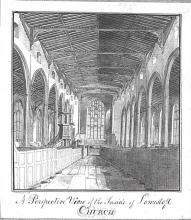
(Parish Register Entries)
The register entries below are presented in as close a way as possible to the original handwritten ones
Photo opposite - The interior of St. Margaret’s Church in 1786 - historic repository of the Lowestoft parish registers - captured by Richard Powles (1763-1807). This ink-and-wash study is to be found in Isaac Gillingwater’s ‘Drawings Illustrative of the History of Lowestoft, Mutford and Lothingland’ (Suffolk Archives, Ipswich - ref. no.193/2/1).

In 1662, an Act of Settlement for the Better Relief of the Poor was passed by Parliament – a measure soon to become known as the Act of Settlement and Removal, as it aimed at restricting the movement of people from the parishes where they were living in a state of poverty into ones (nearby or further removed) where they believed that they would be better off.
Added: 4 November, 2024
Hearth Tax, as a means of raising money for The Crown, was introduced into England following the Restoration of the Monarchy under Charles II in 1660. It functioned on the principle of being a wealth tax, in that the number of fire-places in a house was taken as indicating the affluence of the occupant. The greater the number of rooms heated, the richer that householder was assumed to be – either as owner or renter.
Added: 14 October, 2024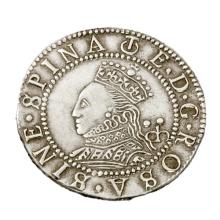
Authorisation for this Elizabethan taxation was granted by Parliament on 18 December 1566 and the official date of collection was 24 February 1568. Lowestoft’s stated contribution of £34 19s 8d was 47% of the Lothingland total of £74 8s 6d and its 112 tax-payers constituted 42% of the half-hundred’s contributors (267 in number). These figures confirm the town’s dominant position in its local area, just as those of the 1524-5 collection did over forty years earlier. The 1568 Subsidy was structured differently from its predecessor in the way that the assessment was made.
Added: 27 September, 2024
The Lay Subsidy of 1524-5 (1) see also (2)
This national taxation measure was approved by Parliament in 1523, to raise money for war to be waged with France and Scotland (who else!), and with a hoped for total of £800,000 as its aim. As with previous countrywide levies, it was based on the value of lands held and rented out (where this was the major source of income), on movable goods (where these served the same purpose) and on wages for men of labouring or servant status.
Added: 20 September, 2024
Comparisons of Lowestoft with other Suffolk communities
Suffolk’s Top 25 Townships (1524-5 Lay Subsidy) (2) see also (1)
Order by wealth
Added: 20 September, 2024