
Eras
Visit our new project Our Fallen. This section includes Wartime, Pre-History and Medieval. Try the Wartime Timeline to look at some key dates in our history
The national tax levied in 1327 to raise revenue for the Crown came at a troubled time for the country, for this was the year in which Edward II was deposed by his wife, Isabella, and her lover, Roger Mortimer, Earl of March – ostensibly, in favour of the future Edward III, who was a fourteen-year-old minor. It was also a time of conflict with Scotland, with an army from north of the border making an incursion into England and engaging with English forces near Stanhope, in County Durham.
Added: 2 September, 2024
When Henry III died in November 1272, his son and successor Edward (thirty-three years old) was in Sicily, on the way home from fighting in the Seventh – and last – Crusade. A hardened warrior of many years experience, it wasn’t until the year 1274 that he finally reached England to take up his throne, with the coronation being held in Westminster Abbey on 19 August. He went on to subjugate Wales, invade Scotland (becoming known as “the Hammer of the Scots”) and generally impose his presence on all around him – his impressive height of 6’ 2” gaining him the nickname of “Longshanks”.
Added: 31 August, 2024
- A large, filled-in trench is visible on the North Denes, a little to the east of the net-drying spars. Its presence is indicated by a slight depression in the ground and by the vegetation growing along its length. The latter is much lusher and of a different type from what is to be found on The Denes generally, showing that the trench’s infill is of a different type from the soil around it.
- The dimensions of this feature were originally eighty to ninety paces in length, on a north-south alignment, and c.

Lowestoft Rental (1545) – Suffolk Archives, Ipswich 194/A10/71
(Formerly North Suffolk Record Office, Lowestoft)
A Lowestoft rental renewed there on the first day of June, in the thirty-seventh year of the reign of our Lord King Henry VIII, by the grace of God King of England, France and Ireland, Defender of the Faith in the said land(s) and Supreme Head of the Church of England and Ireland – relating to the annual rents of the town of Lowestoft, Shadingfield, Ellough and Willingham. [Translated from Latin]
Added: 25 July, 2024
CREDIT: Ivan Bunn and David Butcher
Origins
This article is in its original form, with minor alterations. It was published (with editorial adjustments and changes) in English Ceramic Circle Transactions, vol. 21 (2010), forming pp. 49-74 of that journal.
Added: 20 July, 2024
The Town of Lowestoft c. 1720
This map was created by Ivan Bunn (former archival assistant at the North Suffolk Record Office, Lowestoft) and the writer, working in collaboration and using manorial documentation as the primary source. See end of text for numbered locations, which are also referred to in the narrative.
Added: 15 July, 2024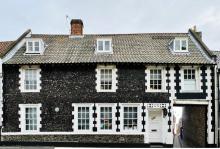
(14 March 1684)
An Inventory Indented of all and singular the goods and Chattels of James Wilde late of Lowestoft in the County of Suff[olk], merchant, valued and appraised the Fourteenth day of March in the year of our Lord One Thousand six hundred eighty three by Joshua Smithson, Nicholas Utting, Robert [? ] and John Aldred of Lowestoft aforesaid, Merchants, as Followeth
Added: 23 June, 2024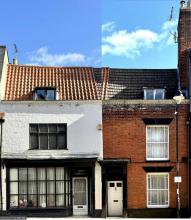
Roger Hill was a Lowestoft merchant of the second half of the sixteenth century, whose burial was recorded in the parish registers on 13 September 1588. He had made his will (Norfolk Record Office, 296 Homes) on 20 August and the inventory of his possessions (NRO INV 4/45) was taken on 16 September. He lived in what is now 31-32 High Street (not at No. 30, as I wrote in error in the LA&LHS Annual Report No.
Added: 7 June, 2024
Much is heard today regarding illegal immigration into the UK from across the English Channel and occasionally the North Sea - most of it driven by difficult and dangerous conditions in the particular home countries of origin or by the perceived opportunity to start a more financially rewarding lifestyle than is possible in those same nations.
Added: 26 May, 2024
One of the many interesting features to emerge from the study of Lowestoft’s history over the years, and the attempts to reconstruct aspects of its past arising from the evidence discovered, is the town’s occupational structure. As can be seen in the table below, the main source in all four fifty-year blocks is parish register material, followed by probate documentation (wills and inventories of goods & chattels), with various other sources following on and with the Tithe Accounts featuring strongly in the last sub-period of all.
Added: 20 May, 2024